


Q4 presents major sales opportunities for retailers, hospitality businesses and service providers. This guide explains how to plan profitable Black Friday and Christmas marketing activity, use print throughout the customer journey and carry seasonal customers into the new year.
Contents
- Why does Q4 marketing need an early start?
- How can you create offers without sacrificing your margins?
- How do you create an effective Black Friday campaign?
- How do you create a Christmas gift guide?
- How can print strengthen a Christmas campaign?
- How can you increase transaction values at Christmas?
- How do you create and manage Gift Vouchers?
- How can you promote Christmas events and experiences?
- How can you turn Q4 customers into new-year sales?
- What should you check before launching a Q4 campaign?
- Frequently asked questions about Q4 marketing with print
Why does Q4 marketing need an early start?
The final months of the year bring Black Friday, Christmas shopping, seasonal events and January promotions into one crowded period. Each campaign may compete for the same budgets, stock, staff and customer attention.
Late planning can lead to rushed artwork, delayed approvals, missed deadlines and offers the business is not ready to fulfil. Worse still, you could miss the opportunity to reach customers when they are most willing to spend and open to discovering new brands.
What should your Q4 plan include?
Black Friday and Christmas certainly require different messaging, but much of the preparation is shared:
- objectives and budgets
- campaign dates and terms
- artwork and print requirements
- quantities and distribution
- internal approvals and responsibilities
Considering these together can reduce duplicated work. One visual system might be adapted across Black Friday Posters, Christmas gift guides, parcel inserts and January Vouchers without making every campaign look identical.
What should you decide before design begins?
Start with the result the campaign needs to produce. This might be attracting new customers, increasing order values, clearing selected stock, selling Gift Vouchers, filling seasonal events or encouraging January purchases.
The objective affects the offer, audience and materials required. A Black Friday promotion needs margin and stock checks. A Gift Voucher campaign needs clear terms and a reliable redemption process. An event campaign needs confirmed dates, capacity and ticketing arrangements.
Giving the creative team accurate information at the outset reduces revisions later.
How far ahead should you plan?
Work backwards from the date customers need to see the campaign, allowing time to:
- agree and approve the offer
- write and design the campaign
- check prices, dates and terms
- prepare and proof artwork
- produce and deliver the print
- distribute materials to branches, venues or customers
A Christmas gift guide that arrives after customers have made most of their purchases has missed its purpose, even if it reaches them before Christmas.
What should a simple Q4 timeline look like?
Late summer: Set objectives, select audiences, develop offers and estimate quantities.
Early autumn: Confirm campaign details, complete artwork and order the main printed materials.
October: Begin early Christmas activity and promote Gift Vouchers, gift guides and seasonal events.
November: Run Black Friday campaigns and increase Christmas visibility.
December: Communicate final order dates, opening hours and event details, then prepare January follow-up activity.
The exact dates will vary. What matters is giving every task an owner, a deadline and enough time to be completed properly.
How can you create offers without sacrificing your margins?
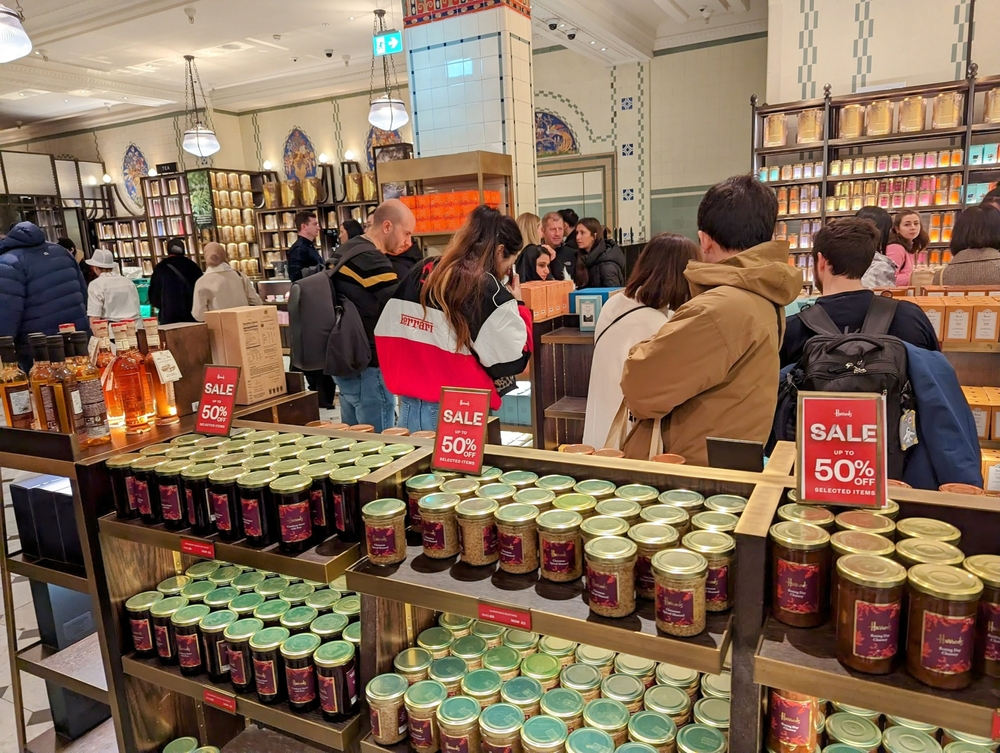
A seasonal promotion should increase profitable sales, not simply order volume.
Before choosing a headline percentage, decide what the promotion needs to achieve and what the business can afford to give away.
What should your offer achieve?
A promotion might be intended to:
- attract or reactivate customers
- increase order values
- sell selected stock or capacity
- generate future revenue
The objective should determine the mechanics. A blanket discount may increase order volume, but a bundle, minimum-spend offer or added extra could deliver a better commercial result.
Which products should you promote?
Not every product needs to be included.
Look for products or services that:
- have sufficient margin
- are available in reliable quantities
- lead naturally to additional purchases
- appeal to a broad enough audience
- can be delivered within the promised timeframe
An offer on a popular entry-level item might attract new customers. A bundle can increase the value of each transaction. Selected reductions can help move seasonal stock without lowering prices across the entire range.
Could you add value instead of cutting prices?
A discount is only one type of incentive. Alternatives include:
- product bundles
- multi-buy offers
- free delivery above a set spend
- a complimentary item or service
- upgrades
- loyalty rewards
- a Voucher for a future purchase
These approaches can make the offer feel worthwhile while protecting the selling price of the main product.
The added benefit still has a cost, so calculate it in the same way you would a discount.
Should you set a minimum spend?
Minimum-spend offers can increase order values, but the threshold needs to feel attainable.
Set it too low and customers may receive the incentive without changing their behaviour. Set it too high and the offer may be ignored.
Use typical transaction values to identify a threshold that encourages customers to add something useful rather than spend far beyond their original intention.
Have you calculated the full cost?
Include more than the reduction itself. A promotion may also create costs through:
- advertising and print
- packaging and delivery
- payment fees
- additional staffing
- returns or cancellations
- complimentary products
- increased customer service demand
Estimate the likely number of redemptions and calculate the profit remaining on each sale. It is better to adjust the offer before launch than discover afterwards that increased turnover produced little return.
Can your business handle the response?
Check stock, staffing, booking capacity and delivery times before publishing the offer.
Limited availability can be a legitimate condition, but it should not become a substitute for planning. Make sure colleagues understand the promotion, know which products qualify and can explain any exclusions clearly.
How do you create an effective Black Friday campaign?
Black Friday gives businesses an opportunity to attract new customers, increase order values and bring forward purchases. It also creates intense competition, making it easy for an offer to disappear among similar discounts.
What makes a good Black Friday deal?
Start by giving customers a clear reason to buy. That means applying the principles in the previous section, then making the offer easy to understand.
Keep the mechanics simple. Customers should be able to understand what they receive, what they need to do and when the offer ends without searching through lengthy terms.
Avoid adding so many exclusions that the headline offer becomes off-putting. A smaller, straightforward saving can be more persuasive than a larger discount surrounded by restrictions.
How should you present a price reduction?
Any saving claim must be genuine and supported by pricing records. A crossed-out price, percentage reduction or statement such as “save £20” implies a comparison with a genuine usual selling price.
The ASA may consider pricing history, how recently and for how long the higher price applied, the number of sales made at that price and whether it applied through the same sales channel. It also expects “up to” claims to reflect the promotion overall, with a significant proportion of included products available at the maximum saving.
State the total price clearly, including unavoidable charges wherever they can be calculated. Mandatory costs should not appear only after the customer has started the purchase process.
Which conditions should appear in the campaign?
Customers should see the significant conditions before deciding whether to respond. Depending on the offer, these may include:
- the start and closing dates
- minimum-spend requirements
- product or customer exclusions
- geographical restrictions
- limits per customer
- availability restrictions
- the channel where the offer can be redeemed
- whether an offer code is required
These details should be clear in the initial promotional material rather than hidden in full terms elsewhere. This applies to print, email and online campaigns.
How can print make a Black Friday campaign more visible?
Use a consistent campaign identity across the customer journey. The same headline, offer, dates and visual cues can appear on:
- Posters and Window Stickers
- Banners and Signage Boards
- Flyers and Folded Leaflets
- Point-of-sale displays like Table Talkers
- Menus and price lists
- Direct Mail
- parcel and shopping-bag inserts
Select formats according to where customers will encounter them. A Window Sticker may attract passing trade, while a parcel insert can present an offer to someone who has already bought from the business.
Use QR codes, memorable URLs or promotional codes to connect print with the relevant landing page and help measure responses. Test every route before production and make sure the online offer matches the printed message.
Should Black Friday last more than one day?
A longer campaign may give customers more opportunity to respond and reduce pressure on one trading day. However, extending a promotion can also weaken its urgency or make the reduced price appear closer to the normal price.
Choose a timeframe that suits the audience, stock and operating capacity. Whether the offer runs for one day, a weekend or a longer period, state the closing date clearly and do not use false countdowns or scarcity claims.
The most effective Black Friday campaign is not necessarily the one with the largest headline discount. It is the one customers can understand, trust and act upon.
How do you create a Christmas gift guide?
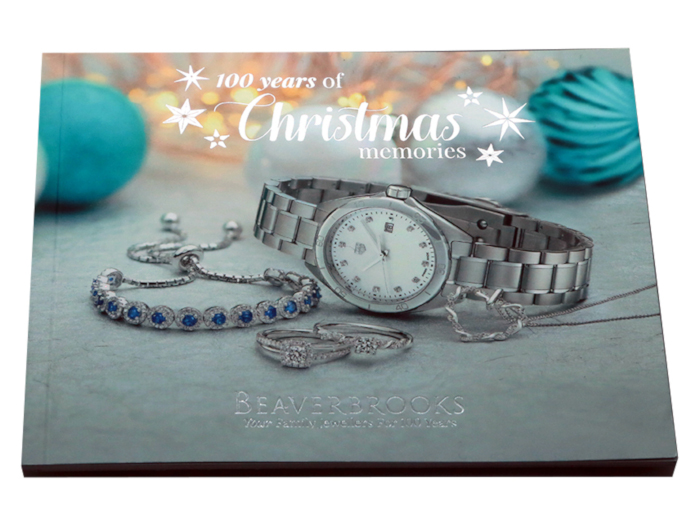
A Christmas gift guide helps customers narrow down their choices, compare products and find suitable options more quickly. It can also give selected products more visibility, support bundles and help customers discover items they may not have considered.
The most effective guides are curated rather than exhaustive. They make buying easier instead of reproducing your entire product range. A Stapled Brochure suits mailings and lighter selections, while a Perfect Bound Brochure makes for a more refined, premium gift guide.
Who is the gift guide for?
Start with a defined audience. A general guide may suit a broad customer base, but a more focused approach can make the content easier to browse and more relevant.
Products might be grouped by:
- recipient
- interest
- price
- product type
- occasion
- business sector
A retailer could create sections such as gifts under £25, gifts for home workers or gifts for food lovers. A business supplying corporate customers might group products by team size, budget or intended use.
Which products should you include?
Select products with a clear gift appeal that are both available and profitable.
You might include:
- bestsellers
- seasonal or new products
- several price points
- complementary products
- Gift Vouchers
Avoid filling space with products simply because they exist. Every item should help a customer make a buying decision.
How should you organise the content?
Create a clear structure before design begins. Decide which sections are needed, how many products each will contain and how much space each item requires.
Each listing should include the details customers need to act, such as:
- product name
- price
- key features
- available options
- product code or reference
- website address or QR code
- ordering deadline where relevant
Keep descriptions brief and specific. Focus on what makes the product suitable for the intended recipient rather than repeating generic claims.
What makes a gift guide easy to use?
Strong product photography, clear headings and consistent layouts help customers compare options quickly. Prices, product names and ordering information should be easy to find without competing with decorative elements.
Give every product a clear route to purchase using a product reference, short URL or QR code.
Which print format should you choose?
The right format depends on the size of the range, how the guide will be distributed and how long customers are likely to keep it.
A Folded Leaflet can work well for a concise selection or local campaign. A Stapled Brochure gives a larger range room to breathe. A Perfect Bound Brochure may suit an extensive or premium collection intended for longer-term use.
Plan the page count and layout before selecting the finished size. Allow space for covers, introductions, section pages, ordering information and terms as well as the products themselves.
A successful gift guide does not ask customers to search through everything you sell. It presents a useful selection, gives them the information they need and provides a clear next step.
How can print strengthen a Christmas campaign?
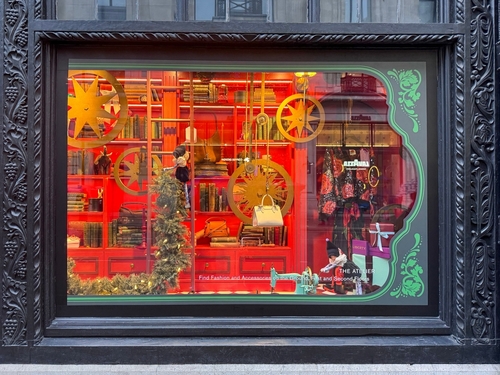
Christmas campaigns need to work across every customer touchpoint. That may include a shopfront, venue, delivery parcel, event space or direct mailing.
Print helps businesses carry the same message through each of these settings, making offers easier to notice and seasonal activity easier to understand.
Where should your Christmas message appear?
Start with the places customers already look for information.
Depending on the business, this might include:
- windows and entrances
- counters and tills
- tables and menus
- product displays
- parcels and shopping bags
- staff areas
- customer mailings
- event spaces
Choose each format according to its location and purpose. Posters and Window Stickers can attract attention from outside. Counter Cards and Table Talkers can explain offers at the point of decision. Parcel inserts can reach existing customers after a purchase.
Avoid filling every available surface. Each item should communicate one clear message or help the customer take one useful action.
Which practical details should you communicate?
Christmas print is not only promotional. It can also prevent confusion during a busy trading period.
Useful information might include:
- seasonal opening hours
- final order dates
- delivery deadlines
- booking instructions
- event dates and times
- collection arrangements
- returns information
- temporary service changes
Place these details where customers are most likely to need them. An opening-hours Poster belongs at the entrance. Delivery deadlines may need to appear on Flyers, parcel inserts and Direct Mail as well as online.
How can packaging support the campaign?
Branded Wrapping Paper, Swing Tags, Stickers and packaging inserts can turn fulfilment into part of the campaign.
They can be used to:
- reinforce brand identity
- include a seasonal message
- promote a related product
- share care or product information
- explain how to redeem a Gift Voucher
Keep inserts relevant to the purchase. A useful recommendation or clear next step is more likely to be noticed than a general sales message.
Should you send Christmas Cards?
Christmas Cards can help businesses thank customers, suppliers, partners or colleagues in a more personal way than a standard email.
Consider:
- who should receive them
- whether the message should be personal or general
- whether signatures will be printed or added by hand
- how addresses will be supplied and checked
- when Cards need to arrive
- whether different audiences need different wording
Allow time for writing, approval, printing, signing and postage. Sending Cards late can weaken the gesture they are intended to make.
How can you increase transaction values at Christmas?
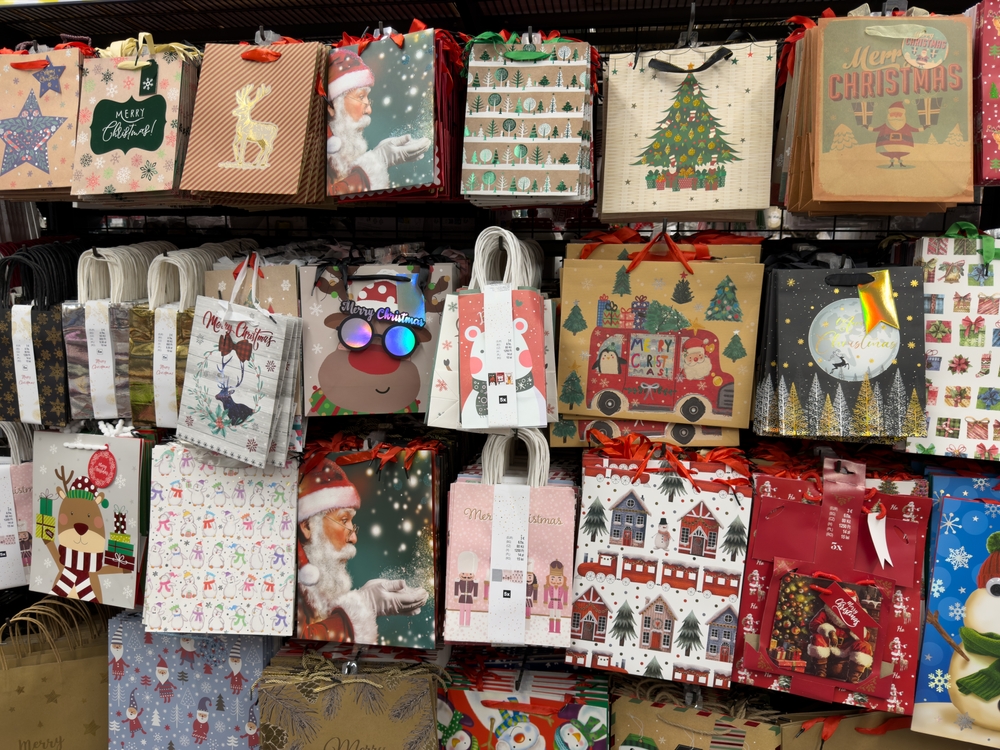
Christmas customers are often buying several related products at once, working to a deadline or choosing for someone else. Useful recommendations can help them complete the purchase while increasing the value of each transaction.
The aim is not to push more products indiscriminately. It is to make the purchase easier, more complete or better suited to the customer’s needs.
What is the difference between upselling and cross-selling?
Upselling means suggesting a higher-value version of the product the customer is already considering. This might be a larger size, a premium material or an upgraded finish. Related products can also be presented as a simple seasonal bundle.
Cross-selling means recommending a related product. Examples include:
- Wrapping Paper along with a gift
- Accessories or complementary item around the core gift
- Stocking filler items as add on purchases
Both approaches work best when the connection is clear and useful.
Should you create bundles?
Bundles can make decisions easier by presenting several products as one clear offer.
They can also help businesses:
- increase average order value
- promote complementary products
- simplify choice
- move selected stock
- create exclusive seasonal packages
State exactly what is included and whether the bundle represents a saving. If customers can buy the items separately, make sure any price comparison is accurate.
Too many bundle options can recreate the complexity they are meant to remove. A small number of clearly differentiated choices is usually easier to understand.
How can print support recommendations?
Printed materials can explain options without relying entirely on staff.
Useful formats include:
- Counter Cards beside relevant products
- Table Talkers with upgrades or additions
- Menus with clear extras
- Shelf-edge materials
- parcel inserts
- Flyers showing bundles
- Gift Voucher Wallets
- Swing Tags with related recommendations
Keep each message brief. Show the additional benefit, the cost and the next step.
For example, “Add branded Wrapping Paper for £X” is more useful than a vague instruction to “complete the experience”.
When should staff make recommendations?
Timing matters. A recommendation should follow an understanding of what the customer needs.
Train colleagues to ask simple questions, such as:
- Is this a gift?
- Would you like it wrapped?
- Do you need something to accompany it?
- Is there a budget you would like to stay within?
- Would a Voucher be more suitable?
Staff should also understand prices, availability and exclusions so they do not create confusion at the point of purchase.
How do you create and manage Gift Vouchers?
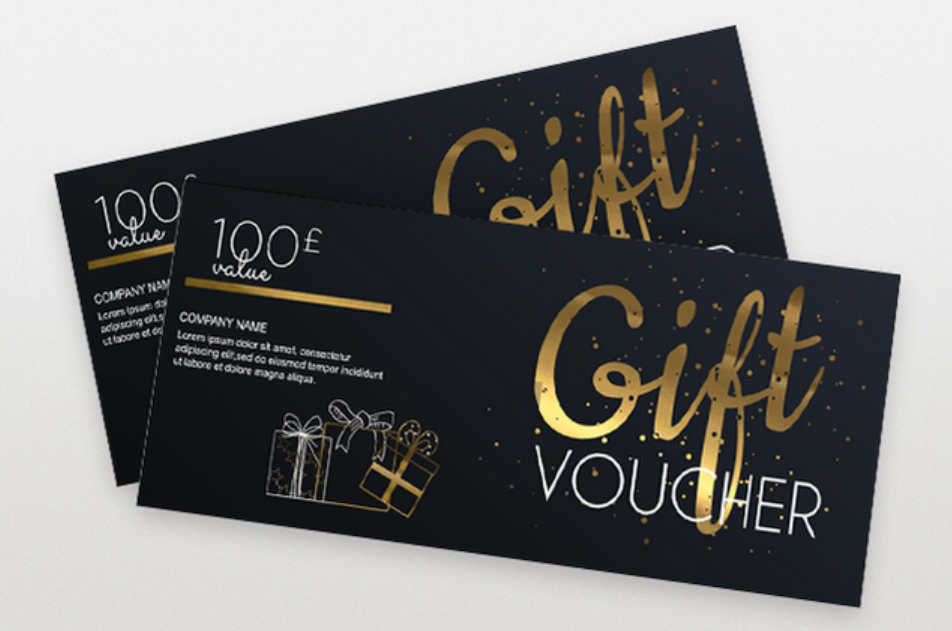
Gift Vouchers can generate advance revenue and bring new customers to a business. They also create an obligation to provide goods or services later, so the scheme needs clear terms, secure controls and accurate records.
What information should a Gift Voucher include?
The design should make the Voucher feel like a worthwhile gift while giving the recipient the information needed to use it.
Include:
- the business name and contact details
- the value or experience provided
- a unique Voucher or redemption code
- the expiry date
- where and how it can be redeemed
- a reference to the full terms
- space for the recipient and sender where appropriate
Important restrictions should be easy to find before purchase, not revealed only when the recipient attempts to redeem the Voucher. Consumer terms must be fair, transparent and written in plain language. Unfair terms or notices are not binding on consumers.
An envelope, Wallet or presentation sleeve can protect the Voucher and provide more room for a message, redemption instructions or full terms without overcrowding the main design.
How can you prevent misuse?
Treat Gift Vouchers with similar care to cash. Each one should have a unique identifier that can be checked when it is redeemed.
Depending on the size of the scheme, this could be managed through:
- sequential numbering
- unique printed codes
- barcodes or QR codes
- a spreadsheet or booking system
- integration with the point-of-sale system
Record when each Voucher was issued, its value, its expiry date and whether it has been fully or partly redeemed. Decide how staff should handle photocopies, lost Vouchers, damaged codes, partial balances and requests for replacements.
What terms should you decide?
Before selling Gift Vouchers, establish:
- how long they remain valid
- where and how they can be redeemed
- whether partial redemption, change or refunds are allowed
- whether any products, services, dates or locations are excluded
- whether they can be combined with other offers
- how lost, stolen or damaged Vouchers will be handled
Make significant restrictions clear before purchase and include the expiry date on the Voucher or accompanying information. Consumer terms must be fair, transparent and written in plain language. Unfair terms cannot be enforced against consumers.
Seek legal advice before launching a scheme involving unusual restrictions, third-party suppliers or substantial customer balances.
When is VAT due on a Gift Voucher?
VAT treatment depends on what the Voucher can buy.
For a single-purpose Voucher, the place of supply and VAT treatment are known when it is issued. VAT is normally due at that point.
A multi-purpose Voucher can be redeemed against goods or services whose VAT treatment is not known when it is issued. VAT is normally accounted for when the Voucher is redeemed. Discount codes and money-off coupons are treated differently from prepaid Gift Vouchers.
How should Gift Voucher income be recorded?
Payment for a Gift Voucher may need to be recorded as a liability rather than immediate revenue because the business still owes the customer goods or services.
For accounting periods beginning on or after 1 January 2026, revised FRS 102 states that an upfront payment for a future right, such as a Gift Card, creates a contract liability. It also contains rules for recognising unused balances, known as breakage.
Keep accurate records of sales, redemptions and outstanding balances. Confirm the VAT and accounting treatment with an accountant, as it will depend on the scheme and the financial reporting standard the business follows.
Clear terms and reliable administration protect both the customer experience and the revenue the scheme is intended to generate.
How can you promote Christmas events and experiences?
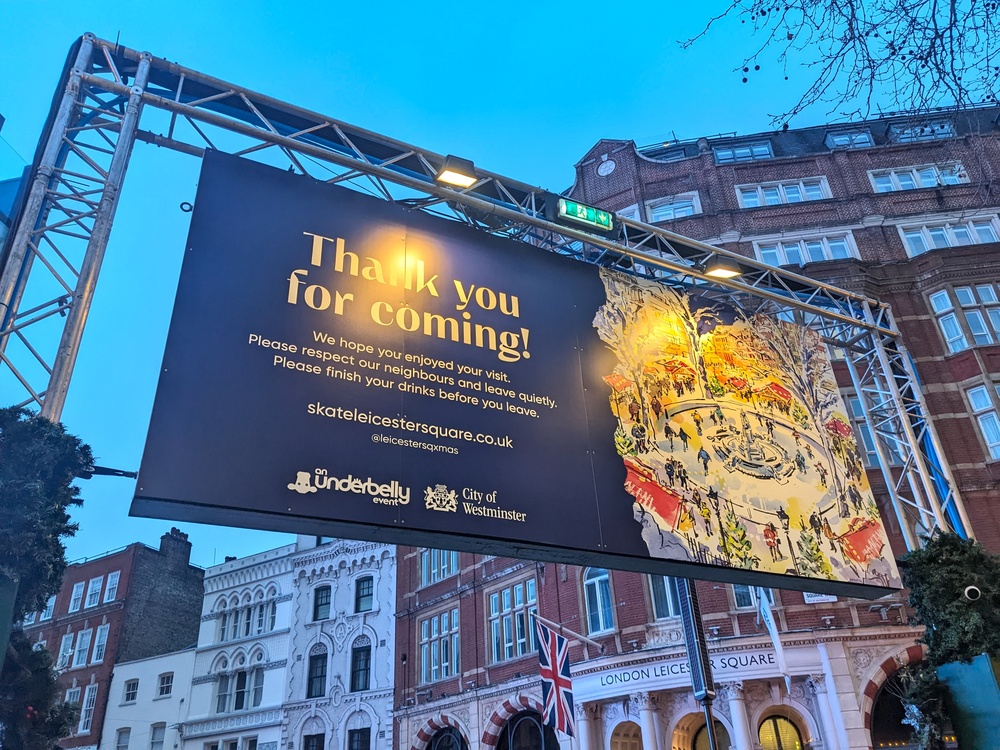
Christmas markets, parties, performances, workshops and hospitality events can generate seasonal revenue while giving customers another reason to engage with a business.
Successful promotion depends on more than attracting attention. Customers also need enough information to decide, book and arrive prepared, while organisers need a reliable way to manage admission.
What should you confirm before promoting an event?
Settle the practical details before artwork begins:
- date, time and venue
- price and booking method
- capacity and age limits
- accessibility
- cancellation and refund terms
Decide which details belong on the main promotional material and which can sit on a landing page or booking platform. The headline may sell the experience, but customers should not have to search for essential information.
Which print products can support the event?
Different materials can guide customers through each stage of the experience.
Before the event, consider:
- Posters and Flyers
- Banners
- Invitations
- Event Tickets
At the venue, you may also need:
- directional signage
- admission information
- Menus and Drinks Menus
- programmes
- Wristbands
- cloakroom or raffle Tickets
Give each item a specific purpose. A Poster should attract attention and communicate the essentials quickly. A programme can carry more detail. Directional signage should prioritise clarity over campaign language.
What should appear on an Event Ticket?
A printed Ticket can confirm the booking, provide admission information and become part of the customer’s anticipation of the event.
Depending on the event, include:
- event name
- date and time
- venue
- ticket type
- price
- admission or seating information
- unique number, barcode or QR code
- important restrictions
- a reference to the full terms
Sequential numbering, perforations or unique codes can help organisers manage admission and reduce duplicate use. Match the control method to the scale of the event and make sure staff know how Tickets will be checked.
Test QR codes and scanning systems before production. Keep a manual attendance list or alternative checking method available in case devices or internet access fail.
What should customers know about cancellations and refunds?
State what happens if the event is postponed, cancelled or changed. Terms should also explain whether customers can cancel their own booking and under what circumstances a refund or transfer may be available.
Customers do not generally receive a statutory 14-day cooling-off period when booking leisure activities for a specific date, such as many event Tickets. However, the organiser’s terms must still be clear and fair, and customers may have rights where the organiser cancels the event or fails to provide what was agreed.
Avoid giving the business unrestricted power to make substantial changes without offering an appropriate remedy. Where individual circumstances are complex, seek legal advice before publishing the terms.
How should you communicate accessibility?
Help customers understand whether the event can meet their needs before they book.
Useful information may include:
- step-free access
- accessible parking
- seating arrangements
- accessible toilets
- hearing assistance
- lighting or sound considerations
- how to request reasonable adjustments
- a contact for specific questions
Service providers have a duty to make reasonable adjustments for disabled customers where required. Clear information and an easy way to discuss individual needs can remove barriers before the event begins.
How can you turn Q4 customers into new-year sales?
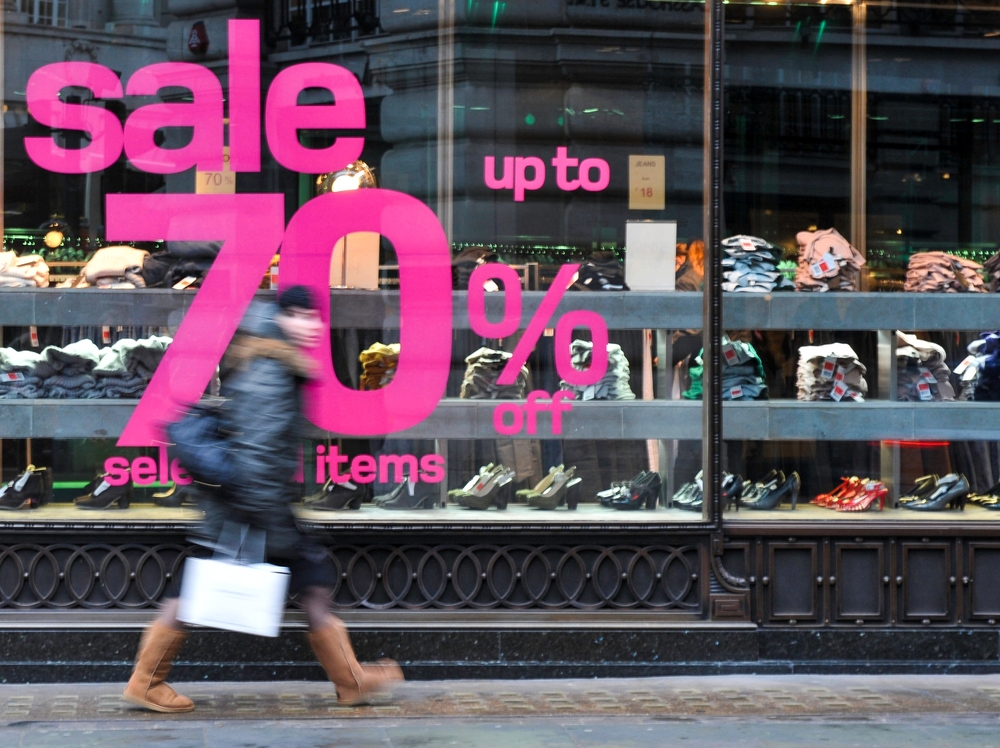
Q4 campaigns can attract first-time customers, increase order volumes and bring lapsed customers back. The value of that activity should not end when Christmas trading finishes.
A planned follow-up can encourage customers to return in January, join a loyalty scheme, leave a review or consider products and services they did not need during the festive period.
How can you encourage a return visit?
Give customers a relevant reason to return rather than simply extending the Christmas campaign. This might include:
- Boxing Day and January sales campaigns
- a Voucher for a future purchase
- an offer on complementary products
- advance booking incentives
- loyalty scheme registration
- new-year products or services
- clearance of genuinely seasonal stock
Choose an offer that supports the next commercial objective. A retailer may want to encourage repeat purchases, while a restaurant or service business may need to fill quieter January dates.
You can introduce the offer with a December purchase using parcel inserts, shopping-bag Flyers or thank-you Cards. State when it can be redeemed so the next campaign does not distract from the current purchase.
How should you thank customers?
A thank-you message can reinforce the relationship without immediately asking for another sale.
Depending on the audience, this might take the form of:
- a printed Card
- a personalised Direct Mail piece
- a parcel insert
- a message from the business owner or team
- an update on what customer purchases have supported
- an invitation to provide feedback
Keep the message specific and credible. Explain what the customer’s business has meant, particularly where they have purchased repeatedly or supported an independent organisation.
How can you encourage reviews and referrals?
Recent customers have direct experience of the business, making Q4 a useful time to request reviews or recommendations.
Make the process simple by providing:
- a QR code linked to the review page
- a short, memorable web address
- clear instructions
- one direct request rather than several competing actions
Do not offer rewards in exchange for positive reviews. Any incentive should apply equally regardless of the opinion expressed and should not make the resulting review misleading.
Referral offers should also explain what both the existing customer and the new customer receive, along with any qualifying conditions.
What should you learn from the campaign?
Review results while the details are still available.
Useful measures may include:
- revenue and profit
- average order value
- offer redemption
- Gift Voucher sales and use
- response by print format or location
- QR code and promotional code activity
- event attendance
- new and returning customers
- leftover print or stock
- customer enquiries and complaints
Compare results with the campaign’s original objective and record what worked, what caused delays and what should change next year.
What should you check before launching a Q4 campaign?

Seasonal print often contains fixed dates, prices and offers. Once it has been produced and distributed, mistakes can be difficult to correct and may leave materials unusable.
Before approving the campaign, check:
- offer prices, savings and minimum spends
- opening and closing dates
- final order and delivery deadlines
- promotional codes and significant conditions
- Gift Voucher values and expiry dates
- event dates, times, venues and admission details
- telephone numbers, web addresses and QR codes
- quantities for each branch, venue or distribution channel
- delivery addresses and distribution dates
Make sure printed materials and landing pages carry the same offer, dates and conditions. Test links and QR codes using the final live pages rather than temporary or draft versions.
Where several teams or locations are involved, control the final files carefully. Remove outdated versions and give one person responsibility for approving the campaign information before print is ordered.
For guidance on bleed, resolution, colour and Foil or Spot UV finishes, refer to our Support Guides.
Frequently asked questions about Q4 marketing with print
When should businesses start planning Q4 marketing?
Late summer is a sensible time to set objectives, confirm budgets and begin developing Black Friday and Christmas campaigns. Working backwards from launch dates gives teams enough time for design, approval, print production and distribution.
How can I create a Black Friday deal without damaging profit margins?
Start with the commercial objective and calculate the full cost of the promotion. Discounts are not the only option. Bundles, minimum-spend incentives, upgrades and future-purchase Vouchers may encourage sales while protecting the value of the main product or service.
What print format is best for a Christmas gift guide?
The right format depends on the number of products, distribution method and desired impression. A Folded Leaflet suits a concise selection, a Stapled Brochure works well for mailings and lighter ranges and a Perfect Bound Brochure makes for a more refined, premium gift guide.
What information should a Gift Voucher include?
Include the business name, Voucher value, unique redemption code, expiry date and clear instructions explaining where and how it can be used. Significant exclusions and conditions should be visible before purchase. Confirm the VAT and accounting treatment with an accountant before launching the scheme.
How can print support a Christmas campaign?
Print can carry promotional and practical messages across shop windows, counters, displays, mailings and deliveries. Posters, Flyers, Wrapping Paper, Swing Tags and parcel inserts can promote offers, while signage can communicate opening hours, order deadlines and collection details.
How can I measure the response to printed marketing?
Use trackable QR codes, short URLs, promotional codes and unique Voucher numbers. Compare responses by location, format or distribution channel, then measure results against the original objective, such as revenue, profit, order value or repeat purchases.
What should I check before approving seasonal print?
Check every price, date, deadline, promotional code and significant condition. Test QR codes and website links, confirm quantities and delivery addresses and make sure printed materials match the final online offer. Give one person responsibility for approving the campaign information before the order is placed.

 English