

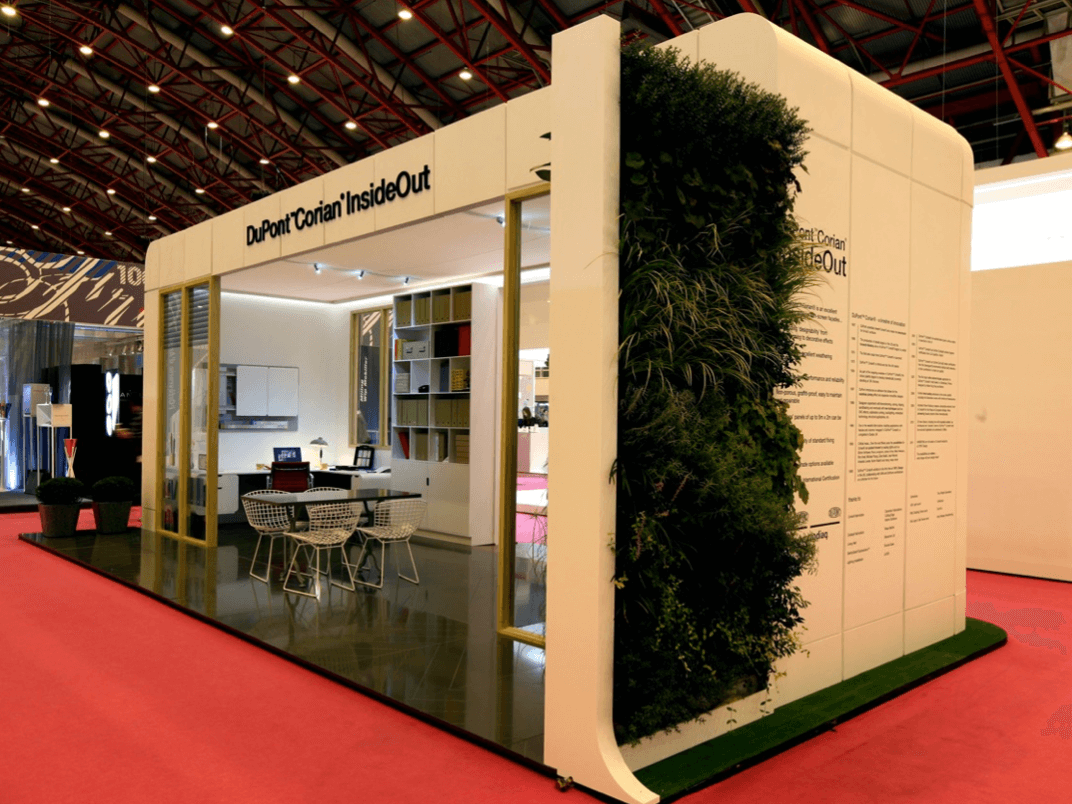
Visitors encounter dozens of stands and have countless conversations during a trade show or exhibition.
The businesses they remember are not always those with the largest stands or the biggest budgets. More often, they are the ones that create experiences people enjoy, interact with and talk about afterwards.
The advice in this guide draws on conversations with exhibitors, organisers, stand specialists and visitors, alongside Solopress’ own experience exhibiting across the UK. Many of the insights and quotations featured here were gathered during interviews we conducted at events including Your Business Expo and The Print Show, supported by observations from our own exhibition activity.
Contents
- Start with the story people will tell
- Big ideas do not always need big budgets
- Turn visitors into participants
- Demonstrate expertise instead of describing it
- Create intrigue
- Build an experience people cannot get anywhere else
- Give people something worth photographing
- Let people take the experience home
- People make stands memorable
- Creativity scales surprisingly well
- FAQs
Start with the story people will tell
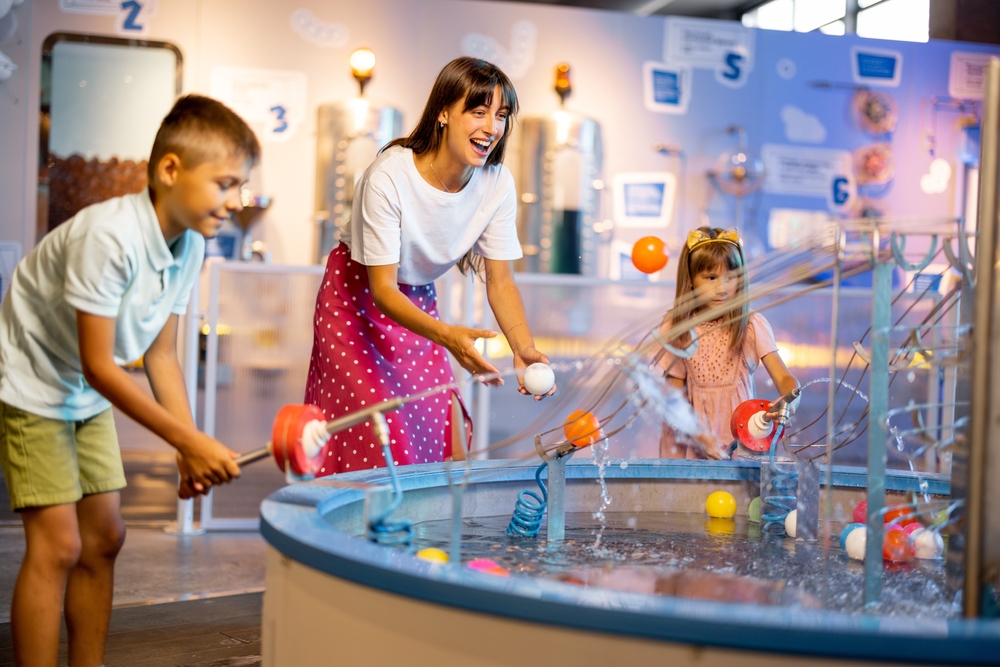
Many exhibitors begin planning by thinking about floor space, display graphics, promotional products and furniture.
Those decisions matter, but memorable exhibition stands often begin by defining the impression visitors should leave with, whether that is a useful insight, a memorable demonstration or a story they can share with colleagues.
Visitors may forget a specification or a sales message, but they often remember an experience. They remember the stand that taught them something useful, surprised them with an unusual idea or gave them a story to share with colleagues.
Jean-Pierre Allard of The Video News Factory believes successful exhibition experiences should combine entertainment with education.
“There should be some interactive things at your stand so that people come along and have fun and learn something about your business.”
That balance appears repeatedly in successful exhibition concepts. Visitors rarely remember a stand simply because it entertained them. Equally, they may struggle to recall a stand that delivered useful information in a forgettable way.
The strongest ideas achieve both.
Before deciding what your stand should contain, decide what visitors should leave with.
That memory might be:
- a useful insight
- an enjoyable interaction
- a striking visual
- a practical demonstration
- a personalised item
- a story worth retelling
- a conversation they did not expect to have
Once that destination is clear, decisions about graphics, activities, giveaways and displays become much easier. A competition, demonstration or visual installation should not exist simply because it seems like a good idea. It should reinforce the memory you want visitors to take away.
Big ideas do not always need big budgets
Some of the most memorable exhibition concepts involve custom-built environments, immersive sets and dramatic installations. These can be highly effective, but memorable does not necessarily mean expensive.
Many successful exhibitors achieve strong engagement with ideas that cost very little to implement. The common factor is not the budget behind the concept, but its ability to attract attention, create interaction and encourage conversation.
Lorraine Devereux of YMCA Milton Keynes found success with an idea many exhibitors might overlook. A simple Hook-a-Duck game became a talking point on the stand and, in her words, provided “a little bit of fun that’s opened some conversations.”
Those decisions matter, but memorable exhibition stands often begin by defining the impression visitors should leave with, whether that is a useful insight, a memorable demonstration or a story they can share with colleagues.
This principle can be applied in many different ways:
- quizzes
- lucky dips
- spin-the-wheel games
- prediction challenges
- mystery prizes
- guess-the-number competitions
The most effective examples create opportunities for engagement without requiring visitors to make a significant commitment of time or attention.
Activities can also provide a welcome change of pace. Exhibition visitors are exposed to marketing messages throughout the day. A challenge, a game or a shared moment of humour can help a stand feel different from the many others competing for attention.
Visitors respond to experiences, not simply to budgets. Some of the strongest ideas come from outside the world of exhibitions altogether.
- Museums encourage exploration
- Fairgrounds encourage participation
- Visitor attractions create anticipation
- Retail environments reward curiosity
Exhibitors looking for inspiration can often ask a simple question:
What would make somebody stop, smile and spend thirty seconds finding out more?
The answer does not always require a large investment. Sometimes it requires little more than a good idea and the confidence to do something different.
Turn visitors into participants
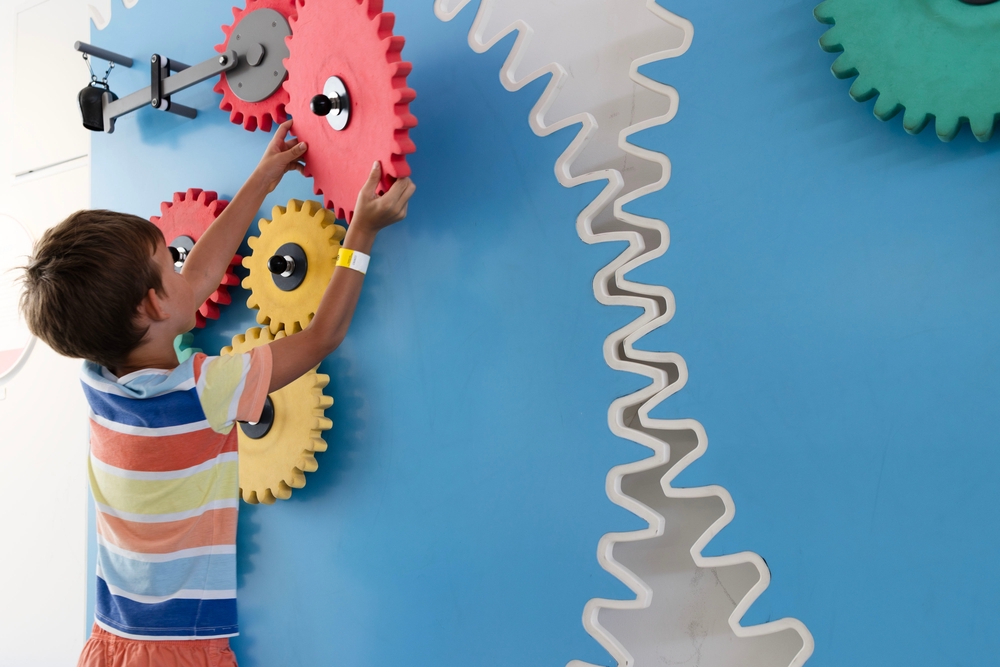
Many exhibition stands ask visitors to watch, read or listen. Memorable stands often ask them to do something instead.
Participation changes the relationship between visitors and exhibitors. Instead of passively receiving information, attendees become involved in the experience itself. That involvement can make interactions more engaging and, crucially, more memorable. In many cases, simple actions are enough to create a stronger connection with a stand.
Visitors might:
- vote in a poll
- test a product
- enter a competition
- contribute to a display
- share an opinion
- take part in a challenge
The activity itself is often less important than the sense of involvement it creates. Visitors who actively participate are more likely to remember both the interaction and the business behind it. Many exhibitors focus on demonstrations, but participation can take those demonstrations a step further.
This approach can be particularly effective when explaining technical products or services. A hands-on experience often communicates value more effectively than a verbal explanation alone.
Exhibiting at The Print Show, Solopress offered free ‘printed coffee’. Any image visitors wished to share could be reproduced on the foam of their coffee. Visitors were then invited to share photographs of their printed coffee on LinkedIn as part of a wider competition.
The idea worked because it combined a physical interaction with a digital one. Visitors engaged with the stand in person, then continued participating after moving elsewhere within the venue.
Activities that extend beyond the immediate footprint of the stand can help exhibitors reach audiences who never physically visit it. They can also create additional opportunities for visitors to encounter the brand throughout the day.
Keep it simple
Interactive ideas need to feel clear and worthwhile if they are going to work in a busy exhibition hall. Visitors are unlikely to engage with activities that feel confusing, time-consuming or disconnected from the exhibitor’s purpose. The strongest concepts offer a clear benefit, whether that is entertainment, learning, competition, curiosity or the chance to win something useful. When participation feels natural and rewarding, visitors are more likely to remember the experience long after the exhibition has ended.
Demonstrate expertise instead of describing it
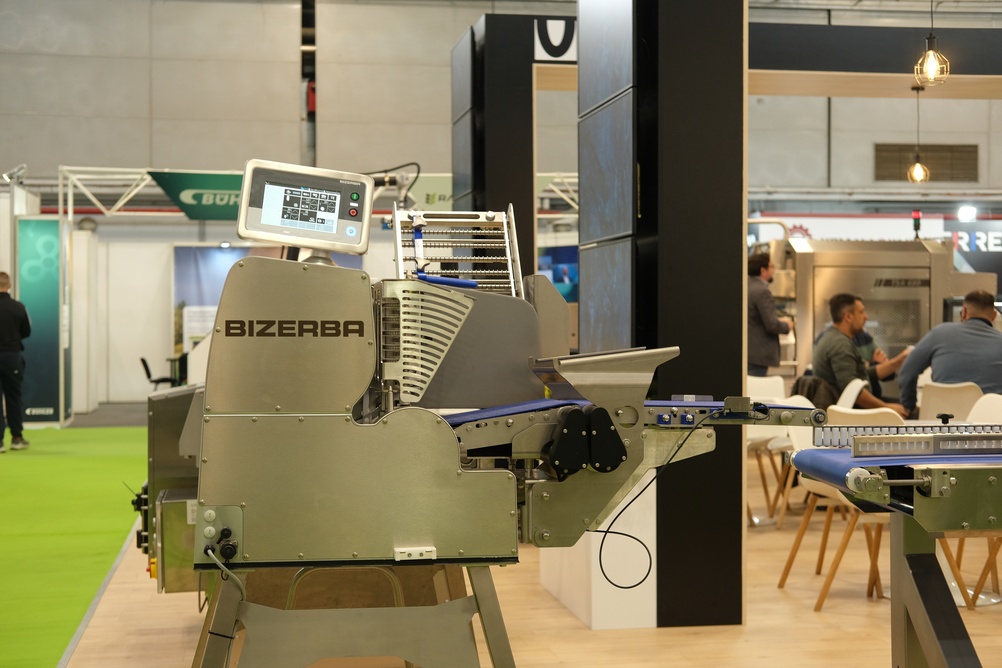
Every exhibition hall contains businesses claiming to be experienced, knowledgeable and trustworthy. Visitors are exposed to so many similar promises that they can quickly become difficult to distinguish from one another.
One way to stand apart is to stop describing expertise and start demonstrating it.
Show, don’t tell
Many of the most effective exhibition stands allow visitors to see skills, products or processes in action.
Rather than relying solely on marketing messages, exhibitors might offer:
- live demonstrations
- product testing
- consultations
- workshops
- troubleshooting sessions
- side-by-side comparisons
These activities give visitors the opportunity to experience expertise directly rather than taking it on trust.
Turn the stand into proof
A stand can act as evidence of what a business does best. If you have a product or service that can be produced, prepared or provided in person live on your stand, what better way is there to show what you can do?
A food producer might offer tastings. A software company might solve real-world problems in front of visitors. A craft business might demonstrate techniques that would otherwise remain hidden behind the finished product.
In each case, the activity itself becomes part of the sales message. Attendees will be bombarded with claims about quality, knowledge or capability. Demonstrate those qualities in real time, and you’ll set yourself apart.
Make learning part of the experience
Jean-Pierre Allard of The Video News Factory believes successful exhibition activities should encourage visitors to “have fun and learn something about your business.”
That learning does not need to take the form of a formal presentation.
- A useful tip
- A surprising statistic
- A practical demonstration
- A chance to compare alternatives
- An opportunity to handle products or materials
Small moments of discovery can leave visitors feeling that their time was well spent. People are often more likely to remember businesses that taught them something than businesses that simply promoted themselves.
Give visitors a reason to stay
Demonstrations can also solve one of the biggest challenges exhibitors face: keeping visitors engaged long enough for meaningful conversations to develop.
A stand that offers something to watch, learn or experience creates a natural reason for people to pause.
That extra time can open the door to questions, discussions and opportunities that might never emerge during a brief walk-past interaction.
When expertise becomes part of the exhibition experience itself, visitors gain a clearer understanding of what makes a business different and why it deserves their attention.
Create intrigue
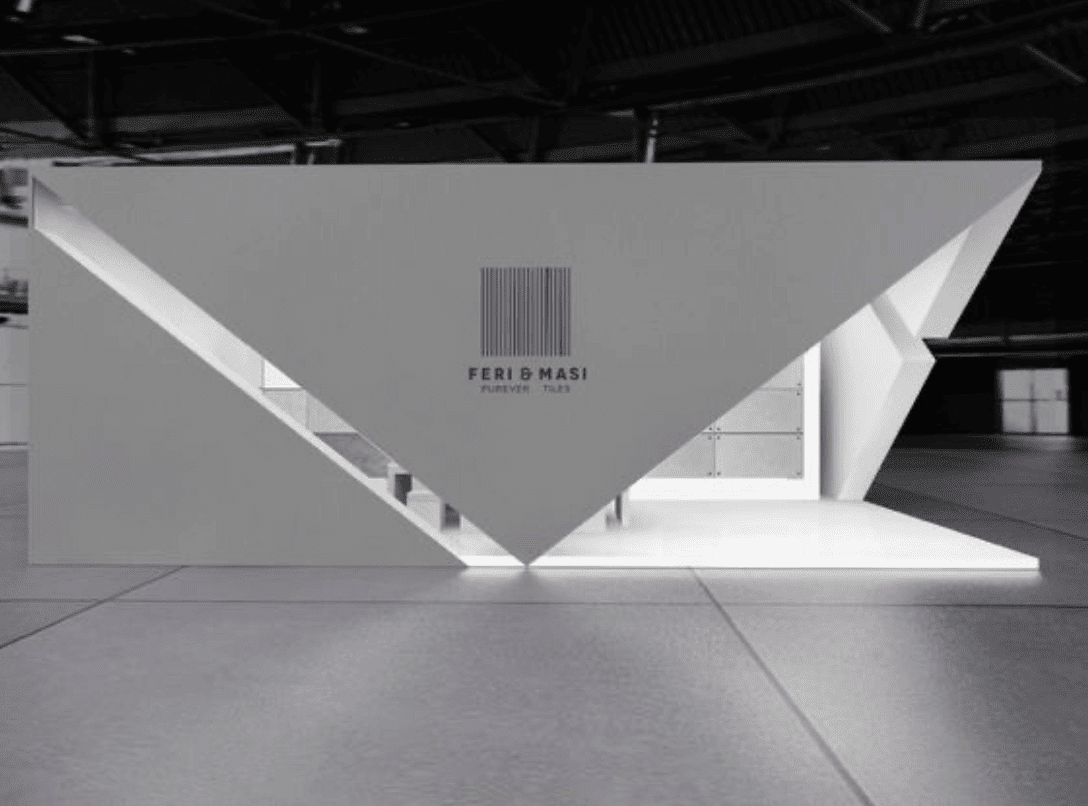
Exhibition visitors make countless decisions throughout the day about where to stop, where to spend their time and which conversations are worth having.
In most cases, those decisions happen within seconds. The challenge is not always attracting attention, but creating enough curiosity to encourage somebody to take a closer look.
Say less, communicate more
Many exhibitors try to communicate everything at once. Product features, service lists, technical information, contact details and marketing messages can quickly compete for space.
Olivia Earl of Postworks told us restraint can be more effective. She advised exhibitors to avoid overwhelming visitors with information and instead focus on bold visuals that create curiosity.
“Have big graphics so people are more intrigued than scared when they look at your stand.”
A stand does not need to answer every question immediately. In many cases, its role is simply to create enough interest for a conversation to begin.
Use layers, patterns and contrast

Exhibition halls are visually busy places. Visitors are constantly filtering information and looking for ways to make sense of what they see.
Well-considered patterns and layered displays can help create that sense of order. Repeated graphic elements, shelving systems and structured layouts make information easier to navigate while giving people details to discover as they move closer.
Physical layers can have a similar effect. Transparent materials, overlapping graphics and displays positioned at different depths encourage the eye to look beyond the surface of a stand.
Contrast is equally powerful. Light against dark, matt against gloss, natural materials beside modern technology or traditional craftsmanship alongside cutting-edge equipment can all create points of interest. These unexpected combinations interrupt the visual rhythm of an exhibition hall and encourage visitors to take a second look.
The goal is not decoration for its own sake. Layers, patterns and contrast help create a stand that rewards curiosity, revealing more to visitors the longer they spend exploring it.
Curiosity creates engagement
Curiosity is a powerful motivator.
People naturally want to resolve unanswered questions, investigate unusual sights and understand things that appear unexpected or different.
Exhibitors can use this to their advantage by creating displays that encourage visitors to ask:
- What is that?
- How does it work?
- Why are people gathering there?
- What happens if I take part?
Those questions create natural openings for interaction.
Give people a reason to take a second look
Intrigue does not require mystery for its own sake.
The goal is not to confuse visitors, but to encourage them to spend a little longer engaging with the stand. You can achieve this with original and unexpected ideas that create a point of difference on your stand:.
- A striking prop
- An unexpected demonstration
- A provocative question or bold statement in text
- An unusual visual concept
- A display that changes throughout the day
The most memorable exhibition stands often resist the urge to communicate everything immediately. Instead, they reveal just enough to encourage visitors to step closer and discover more.
Build an experience people cannot get anywhere else
Visitors may encounter similar products and services throughout an exhibition. One of the most effective ways to stand apart is to create an experience that exists only at your stand.
The power of one
Many businesses have several products, services and achievements they want to promote. The temptation is to fit all of them into one stand.
However, visitors are processing huge amounts of information throughout the day. A stand built around one memorable concept is often easier to understand and easier to recall afterwards. People may forget a list of features, but they are more likely to remember the company with the giant prop, the immersive environment or the stand that approached a familiar subject in an unexpected way.
Once that central idea is established, every other element of the stand can reinforce it, from the layout and graphics to demonstrations, giveaways and conversations.
Let visitors discover the story
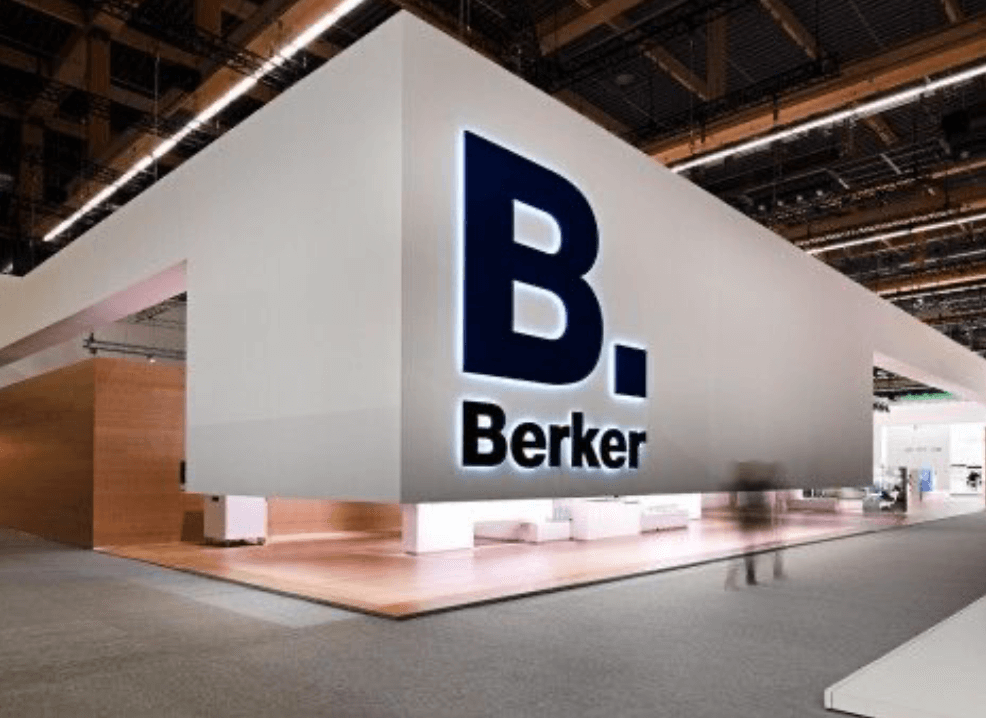
Many exhibition stands try to reveal everything at once. The assumption is that the more visitors can see, the more they will understand.
Some of the most memorable stands encourage visitors to explore. They might have to walk around a feature wall, peer through an opening or move through the space before the full idea becomes clear. Discovery becomes part of the experience itself.
Large exhibition spaces sometimes achieve this through immersive themed environments and carefully planned layouts that reveal different features as visitors move around the stand.
The same thinking can be applied on a smaller scale:
- A simple entrance feature
- A hidden demonstration area
- An intriguing route through the stand
- A collection visitors gradually uncover
- A display that changes as the day progresses
A stand does not have to reveal everything at first glance. The important thing is that there is always a clear and welcoming way for visitors to engage.
Let people watch something being created
People are naturally drawn towards craft, skill and expertise. This is one reason live artists, makers and demonstrations often attract crowds. The finished product matters, but so does the opportunity to witness the process.
- A designer creating artwork
- A product being assembled
- A personalised item being produced
When creation itself becomes part of the exhibition experience, people stay because they want to see what happens next.
Give visitors a role in the outcome
Experiences become more memorable when people influence them. Rather than simply observing, visitors might vote, choose, build, personalise or contribute.
- They could help create a collaborative display
- Personalise an item to take away
- Leave a message for future visitors
- Contribute to something that grows throughout the event
The result is different every time because the audience becomes part of the experience itself.
Work with the venue, not around it
Some of the most memorable exhibition ideas involve elements visitors would never expect to encounter. Live demonstrations, themed environments, unusual props and interactive experiences can all help a stand become part of the event itself.
Brian Charity, Senior Event Manager at Exhibition Centre Liverpool, encourages organisers and exhibitors to share those ideas early. “You might be surprised at what can be achieved.”
He points to everything from barbecues and medical demonstrations to animals and climbing walls as examples of activities that venues can often accommodate, provided the necessary planning and risk assessments take place.
The key, he says, is communication. “The worst thing to do is to turn up on the day and hope to get away with something.”
Brian recalls one exhibitor tattooing visitors without prior approval and another flying a drone without the correct permissions. In the latter case, he believes the venue could have helped. “Had he got the correct licences, we could have worked with him to get his drone shots.”
For exhibitors, the lesson is an encouraging one rather than a restrictive one. Original ideas do not have to be abandoned because they are unusual. In many cases, they simply need to become part of the conversation early enough for the venue team to help make them happen safely and successfully.
Play with scale and humour

Some exhibition stands occupy vast floor spaces and feature impressive technology. Others consist of little more than a table, a banner and a well-executed idea. Whatever the budget, memorable stands often share one characteristic: they allow themselves to be playful.
A giant version of an everyday object, a game that encourages participation or an unexpected visual joke can interrupt the rhythm of an exhibition hall and give visitors a reason to stop.
There is something naturally engaging about exaggerated scale. Oversized props and unusual displays encourage people to smile, spend longer on a stand and, increasingly, take photographs to share with other people.
Games can have a similar effect. A challenge, competition or interactive activity creates movement and conversation while making visitors active participants rather than passive observers.
Brian Charity, Senior Event Manager at Exhibition Centre Liverpool, sees enormous variety across the events hosted by the venue. “There’s so many stands. It’s creative, ultimately.” From simple displays to elaborate themed environments, exhibitors who embrace that spirit of creativity are often the ones visitors remember afterwards.
The objective is not simply to entertain. Humour and surprise should reinforce the story a stand is trying to tell, giving visitors a positive memory that remains associated with the business behind it.
Give people something worth photographing
Exhibition visitors no longer experience events solely in person. Many interactions continue through smartphones, social media and conversations long after a trade show has ended. A memorable photograph can extend the reach of an exhibition stand far beyond the people who physically visit it.
Think beyond the backdrop
When exhibitors think about photography, they often focus on branded backdrops and photo opportunities.
These can be effective, but visitors are more likely to photograph something that feels unusual, surprising or worth sharing.
That might include:
- oversized props
- unusual materials
- themed installations
- personalised products
- live demonstrations
- creative giveaways
- interactive displays
The strongest examples become part of the visitor experience rather than existing purely as marketing devices.
Create moments people want to share
At one Solopress exhibition campaign, visitors were invited to collect printed coffees featuring customised designs and messages.
The concept worked because it combined several ingredients at once.
Visitors received something personalised, enjoyed a moment of surprise and left with an item they naturally wanted to photograph and share.
As attendees carried the drinks around the venue, the idea generated visibility beyond the immediate footprint of the stand itself. Conversations began with people who had never visited the stand, simply because they were curious about what they had seen.
The photograph became part of the experience rather than the objective.
Design for the camera without losing authenticity
Not every exhibition concept needs to be social-media focused.
Visitors are often quick to recognise experiences that feel engineered solely for online exposure.
The most successful examples tend to work in both contexts. They are enjoyable in person and happen to photograph well afterwards.
A visitor who takes a picture because they genuinely found something interesting is often more valuable than one who feels encouraged to post for the sake of it.
When developing exhibition concepts, it can be useful to ask two simple questions.
- Would somebody choose to photograph this?
- Would they want to show it to somebody else?
Ideas that satisfy both questions can continue generating conversations long after visitors have left the exhibition hall.
Let people take the experience home
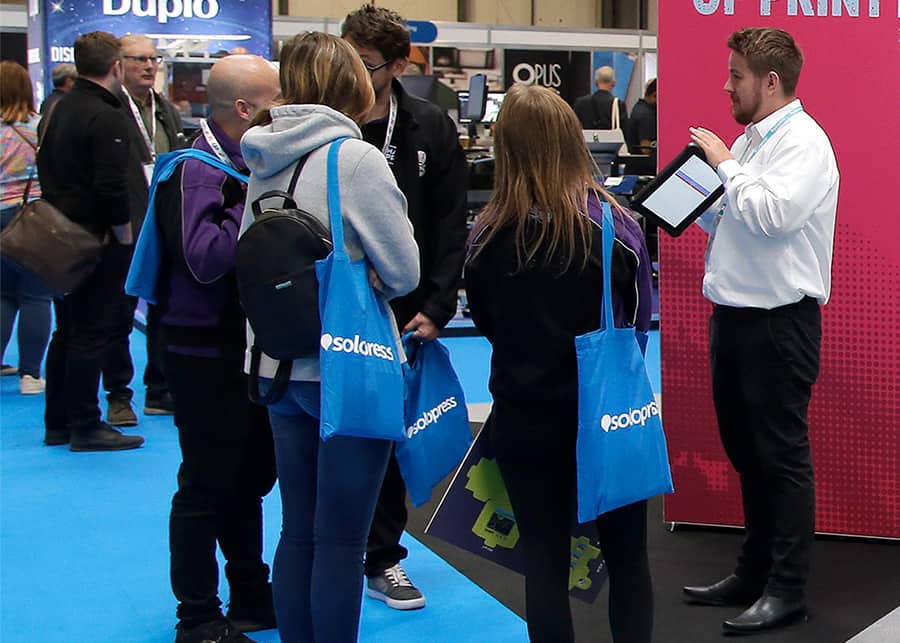
Memorable exhibition experiences do not end when visitors leave the stand.
Physical objects help carry those memories into offices, homes and future conversations.
Printed materials and promotional products should not be viewed simply as information or advertising. They can become part of the experience itself.
Print can become part of the story
A well-designed brochure is more than a list of products and services.
It can become a reference guide that stays on a desk.
- A creative fold can reward curiosity.
- A sample pack can turn a conversation into a practical demonstration.
- A personalised printed item can remind visitors not only of a business, but of the experience they had while interacting with it.
The most effective exhibition print often invites people to pick it up, open it, unfold it or explore it. Foils catch the light, textured stocks encourage touch, unusual formats stand apart from familiar leaflets and flyers and interactive print can turn information into discovery. Physical objects naturally suit environments where visitors are already handling products, asking questions and collecting ideas. It’s the bug advantage that trade shows and in-person events have over online activity.
Promotional products work best when they complete the experience
The most memorable giveaways are rarely the ones handed out without context. They are the ones connected to an activity, a conversation or a moment visitors enjoyed.
A personalised coffee cup, a sample created during a live demonstration or a prize won as part of a challenge all carry the memory of that interaction with them.
Our conversations with exhibition visitors also suggested that practicality still matters. When we asked people about the promotional products they liked collecting at trade shows, the most popular answer by a considerable margin was the humble Pen. Notebooks, Water Bottles, Mugs and Tote Bags were also regular favourites because they remain useful long after the event itself.
The object may be simple, but its greater value lies in acting as a reminder of the business, the stand and the experience that brought the two together.
Build your own merchandise
Custom promotional products do not always require fully bespoke manufacturing.
As discussed in our guide to exhibition essentials, Stickers can transform many everyday objects into branded giveaways.
Applied creatively, they can help exhibitors create distinctive merchandise for limited campaigns, smaller events or one-off exhibitions.
- Window Stickers can be applied to glass containers.
- Foil and holographic Stickers can add impact to simple packaging.
- Custom-shaped Stickers can be designed to follow the contours of unusual objects or create playful visual effects.
This approach allows exhibitors to think more creatively about the items they distribute. The memorable part of the giveaway is not always the object itself, but the unexpected combination of object, message and moment.
Original print creates stronger memories
Exhibitions reward originality. Visitors may spend hours looking at fomulaic displays, products and promotional materials, so an unusual format or finish will encourage attendees to pause a little longer.
- A folded reveal
- A personalised print
- A tactile sample
- A beautifully finished invitation
- A keepsake rather than a handout
Creative print works particularly well when it supports the wider story the stand is trying to tell.
The brochure, sample pack or promotional item becomes another chapter in the visitor’s experience rather than a separate marketing tool.
People often remember physical objects because they can return to them.
They pick them up again, show them to colleagues or leave them on a desk, where they continue to act as reminders of a conversation, demonstration or moment of surprise. That wat the experience continues long after the exhibition hall has closed.
People make stands memorable
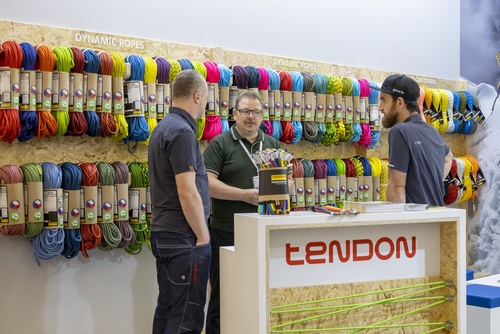
Exhibition stands are often judged by their graphics, displays and promotional materials.
Those elements matter, but conversations with exhibitors and visitors repeatedly pointed towards another factor that can have an even greater influence on how a stand is remembered.
People may forget a banner or a giveaway, but they are often far more likely to remember how somebody made them feel.
Genuine conversations leave lasting impressions
Christopher Pogson of Irene Royal Jelly highlighted the difference he noticed when speaking to exhibitors.
“The people on the stands seem to be the business owners and have a vested interest in the business. They’re taking time to listen to what I need and to present their business in a very honest and open way.”
His observation is less about job titles and more about making sure visitor feels like they’ve had an authentic interaction with individuals that genuinely represent their company with knowledge and authority.
Visitors tend to respond positively when conversations feel genuine, relevant and tailored to their needs rather than following a rigid sales script.
Personality attracts people
Several exhibitors and visitors pointed to the importance of approachability.
Gary Phillips of Security Everywhere believes personality can be one of the biggest factors influencing whether visitors choose to engage.
“The ones that look interested, they just kind of say, ‘Hello, come talk to me.'”
Even the most creative exhibition concept can struggle if visitors do not feel welcome approaching the people behind it.
Every visitor is having their first conversation
One challenge exhibitors face is maintaining energy throughout a long event.
After hours of introductions, demonstrations and networking conversations, it can be tempting to slip into autopilot.
Mark Taylor of Education on Fire offered a useful reminder.
“It might be you’ve had 200 conversations, but for that particular person, it’s their first conversation.”
The enthusiasm, attentiveness and curiosity shown during the interaction you have with individual attendees can have a significant impact on how the business is remembered afterwards. Creative displays, interactive activities and memorable giveaways can all help attract attention, but visitors leave remembering the humans they met.
The strongest exhibition stands combine both elements successfully: an experience that captures attention and a conversation that makes visitors glad they stopped.
Creativity scales surprisingly well
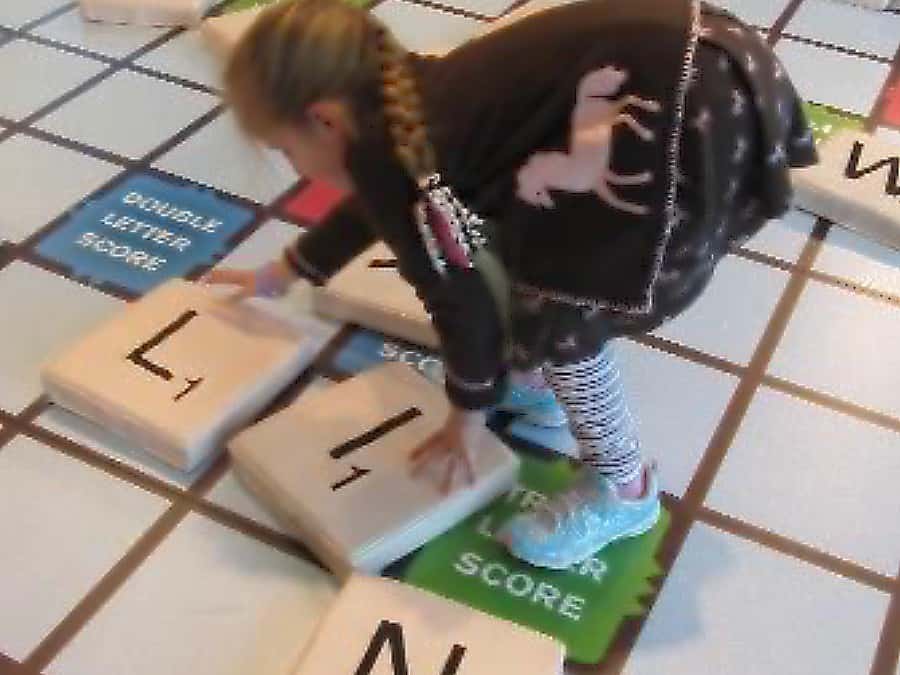
Memorable exhibition ideas can take many forms. Some involve custom-built environments, specialist fabrication and substantial investment. Others require little more than a creative concept and the confidence to try something different. Whatever resources you have to hand, originality is not tied to budget. Exhibitors can usually find ways to create experiences that encourage visitors to stop, engage and remember.
Ideas for modest budgets
Smaller budgets often benefit from simplicity.
Activities that encourage participation can be surprisingly effective without requiring significant investment.
Examples might include:
- quizzes and challenges
- lucky dips
- Hook-a-Duck games
- prediction competitions
- themed sweets or treats
- custom Sticker packs
- personalised labels
- visitor voting walls
- simple product demonstrations
The goal is not to compete with the largest stands in the hall.
It is to create a reason for visitors to stop and start a conversation.
Mid-range ideas that extend engagement
With a little more budget available, exhibitors can begin combining physical and digital experiences.
Ideas in this category might include:
- branded coffee or refreshments
- social media competitions
- product sample packs
- live demonstrations
- personalised giveaways
- interactive displays
- collaborative artwork
- limited-edition merchandise created for a specific event
These concepts can help exhibitors extend engagement beyond the immediate stand space and create opportunities for visitors to interact with the brand after the event itself.
Bigger budgets create bigger possibilities
Larger budgets can open the door to more ambitious exhibition concepts.
Examples may include:
- bespoke stand builds
- immersive themed environments
- interactive installations
- custom-made props
- live production areas
- multi-zone visitor experiences
- large-scale demonstrations
- theatrical lighting and staging
- personalised products created while visitors watch
The strongest examples use these investments to support a clear idea rather than simply creating a larger physical presence. Visitors rarely remember the dimensions of a stand. Rather, they remember what happened there.
Start with the idea, not the budget
When discussing memorable exhibitions, it is easy to focus on what money can buy.
However, many of the examples highlighted throughout this guide began with a simple concept rather than a large expenditure.
- A Hook-a-Duck game that sparks conversations.
- A personalised coffee that visitors photograph and share.
- A practical demonstration that teaches people something useful.
- A striking visual that encourages somebody to stop and ask a question.
- A printed keepsake that remains on a desk long after the event has ended.
While budget may determine how an idea is executed, it’s the idea itself that makes it memorable. That’s why the most useful question for exhibitors is often not:
“What can we afford?”
But:
“What experience do we want visitors to remember?”
FAQs
What makes an exhibition stand memorable?
Memorable exhibition stands usually give visitors something specific to remember. That might be an interactive activity, a useful demonstration, an unusual visual feature, a meaningful conversation or a creative giveaway.
The strongest concepts often combine engagement with a clear connection to the exhibitor’s products, services or expertise.
Do memorable exhibition stands need a large budget?
Not necessarily.
While larger budgets can enable immersive environments and ambitious installations, many successful exhibition ideas are surprisingly simple. Activities such as quizzes, competitions, demonstrations and interactive challenges can create memorable experiences without requiring significant investment.
What interactive activities work well at trade shows?
The most effective activities are usually easy to understand and quick to participate in.
Popular options include:
- competitions
- product demonstrations
- live testing
- voting activities
- quizzes
- lucky dips
- social media challenges
- collaborative displays
Activities tend to work best when they encourage conversation rather than distracting from it.
How can exhibitors encourage visitors to stop at their stand?
Visitors are more likely to stop when a stand creates curiosity or offers something worth exploring.
Strong visual concepts, demonstrations, unusual displays, interactive activities and approachable staff can all help attract attention.
Simple, clear messaging is often more effective than attempting to communicate too much information at once.
Should exhibition stands focus on products or experiences?
The most effective stands combine both.
Visitors need to understand what a business offers, but they are also more likely to remember experiences than product information alone.
Demonstrations, participation and conversations can help visitors engage more deeply with products and services while creating stronger memories of the stand itself.
Are printed materials still important at exhibitions?
Yes.
Printed materials and promotional products can extend the life of an exhibition experience by giving visitors something tangible to revisit later.
Creative print formats, tactile finishes, personalised products and memorable giveaways can reinforce conversations and help businesses remain visible long after an event has ended.
What is the biggest mistake exhibitors make?
Several exhibitors and exhibition specialists interviewed for this guide highlighted a common issue: trying to do too much.
Overcrowded graphics, complicated activities and excessive information can overwhelm visitors.
Memorable stands are often built around a single clear idea, making it easier for attendees to understand, engage and remember what they have seen.
Play with scale and humour
Some exhibition stands occupy vast floor spaces and feature impressive technology. Others consist of little more than a table, a banner and a well-executed idea.
Whatever the budget, memorable stands often share one characteristic: they allow themselves to be playful.
A giant version of an everyday object, a game that encourages participation or an unexpected visual joke can interrupt the rhythm of an exhibition hall and give visitors a reason to stop.
There is something naturally engaging about exaggerated scale. Oversized props and unusual displays encourage people to smile, spend longer on a stand and, increasingly, take photographs to share with other people.
Games can have a similar effect. A challenge, competition or interactive activity creates movement and conversation while making visitors active participants rather than passive observers.
Brian Charity, Senior Event Manager at Exhibition Centre Liverpool, sees enormous variety across the events hosted by the venue. “There’s so many stands. It’s creative, ultimately.” From simple displays to elaborate themed environments, exhibitors who embrace that spirit of creativity are often the ones visitors remember afterwards.
The objective is not simply to entertain. Humour and surprise should reinforce the story a stand is trying to tell, giving visitors a positive memory that remains associated with the business behind it.



 English
  French
  Spanish
  German
  Italian
  Dutch
Dutch  Polish
  Romanian
  Bulgarian
  Danish
  Turkish
  Portuguese