

Charities are a fast-growing sector, with new organisations always emerging. However, there is important administration to complete and lessons to learn. Charitable organisations are strictly regulated, so it’s important to be aware of the relevant guidelines. Becoming a registered charity involves several administrative steps.
This guide looks at some of the key steps involved in getting established, raising funds and promoting your charity effectively, including where printed materials can help build visibility, trust and support.
Why is having support as a charity so important
Without support, your charity wouldn’t be able to make the difference you aspire to achieve each day. Having people show encouragement for your cause is essential for helping address the critical cause you are trying to raise awareness for. By finding inventive, creative ways to raise funds across a number of streams, you can make sure your charity is doing all it can to support your cause. All the while, it’s essential to ensure that your charity is registered and that your activities remain compliant with guidelines.
How do I get a charity code?
It’s important that you register your charity and get a unique code to become a recognised cause. To start, you must set up your charity and define your charitable purpose. From here, you can adopt a structure and appoint at least three trustees. You will then need to ensure that you have prepared all the necessary documents, such as governing documents (constitution), details regarding the trustees, recent bank statements and a statement on ‘public benefit’. Once you have gathered all this information, you can then apply to register your charity online with GOV.UK.
Registration will usually take 12 weeks after the request has been submitted. Registering your charity is a legal requirement if more than £5k per year is earned. After receiving your charity number, you can register with HMRC to claim tax relief on donations through Gift Aid. This entitles you to business rates relief and tax exemptions, allowing you to take advantage of private sector schemes like Solopress Charity Partnerships.
What is the Fundraising Regulator?
Fundraising practice and regulations apply to any fundraising carried out on behalf of your charitable organisation, whether by staff, volunteers or paid fundraisers. The new Code of Fundraising Practice started on 1st November 2025.
This code sets all the standards that are linked to fundraising completed by charitable institutions and third-party fundraisers in the UK. The code summarises all the key parts that are legally required and provides links to the relevant regulator and guidance.
Fundraising regulations help charities if a complaint is raised, as they will launch an investigation, issue formal recommendations to charities, and, in cases of persistent wrongdoing, report the charity to the Charities Commission or the Information Commissioner’s Office (ICO).
How do I raise funds?
Charity Events
There are many different ways to raise funds for your charity. A big way to raise money is by putting on events. There’s a magnitude of events that can be put on to reach a wide range of people, from physical challenges such as marathons and sky diving to social events such as coffee mornings. Events help raise donations as they create an engaging, social experience for people to engage in. Both large and small events help increase visibility and attract new charitable supporters, whilst allowing for multiple revenue streams.
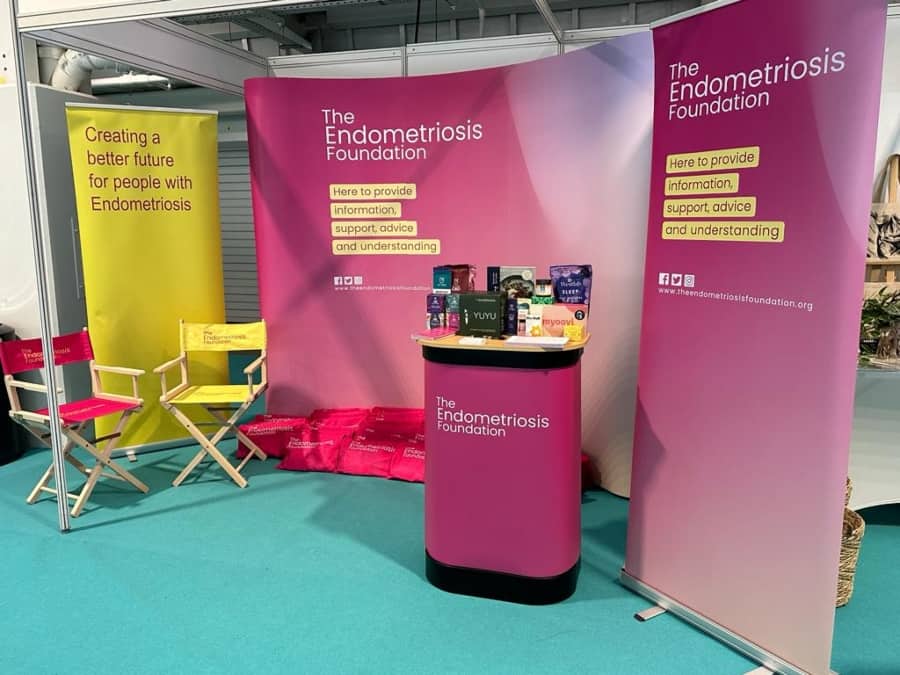
Ticket sales, sponsorship, and raffles are all ways that these events raise donations. Items such as vinyl banners and sponsorship t-shirts can help promote the event and raise more money. We worked with Carla Cressy from The Endometriosis Foundation, who wanted to create a full setup for her appearance at the Fertility Show in London. She purchased roller banners, exhibition stands and even director chairs to help create an eye-catching space.
Charity Mailouts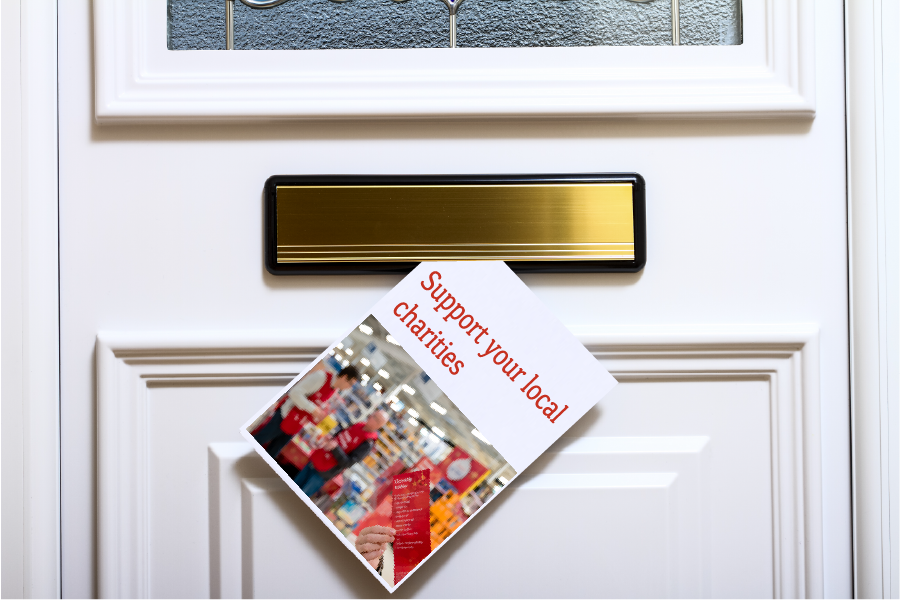 One of the most popular ways to engage and raise funds is through mailouts. But what are they? Mailouts are usually a large-scale distribution of printed information or promotional materials, such as flyers and leaflets, postcards or even brochures. These are all sent out to a large group of people at one time. These are a good way to guarantee contact with a wide range of people at one time in an effective way.
Here at Solopress, our design team has worked closely with a range of charities to produce custom artwork to help them raise awareness and meet their target audience. The information you’re sending out must be engaging to ensure that people want to sign up and raise funds.
Door-to-door charity campaigns

Another opportunity to engage the public in your charity is through door-to-door (also known as D2D) visits. Although this method can have some negative connotations towards the public, it is the most successful F2F (face-to-face) fundraising technique. With every £1 spent on F2F fundraising, including D2D, £4.20 is generated in return, as reported by Charity Link. So, despite how some may view this technique of fundraising, it is successful.
To ensure that you look legitimate when going door-to-door, investing in a uniform can help combat some of the negativity. By having a branded lanyard or fleece, you appear more established and serious about the charity you are fundraising for.
Charity shops

Charity shops are a big part of raising money, and they draw in a large number of people. These shops are designed to bring in donations as they have a high profit margin. This is because over 90% of stock comes directly from donations made by the public. As the core inventory for these stores is required for free, apart from the few expenses, such as covering rents, utilities, and staff, all the money made goes to supporting the charity’s cause.
Although the majority of the stores’ stock is donated, you will find a range of new items to be purchased, such as cards, badges and stickers which are usually branded with the charity’s logo. A few other expenses go toward smaller items, such as swing tags for pricing and store signage. Another small expense is the staff uniform. This includes items such as branded t-shirts, lanyards and ID cards. These items help shoppers identify who they can go to for help and where they can go to purchase their items.
Why choose Solopress to help?

Here at Solopress, we have worked with a wide range of charities to help get their message out to the public. With every purchase made by a registered charity, we offer 10% off across our entire range and help you to take advantage of VAT exemption on eligible products. All we need is your registered code, and we can help save money for customers who need it the most.
Working alongside charities, we have seen the difference that print continues to make, and we will continue to show our support. Head over to the Solopress charity page now to see how we can help make a difference.



 English
  French
  Spanish
  German
  Italian
  Dutch
Dutch  Polish
  Romanian
  Bulgarian
  Danish
  Turkish
  Portuguese