

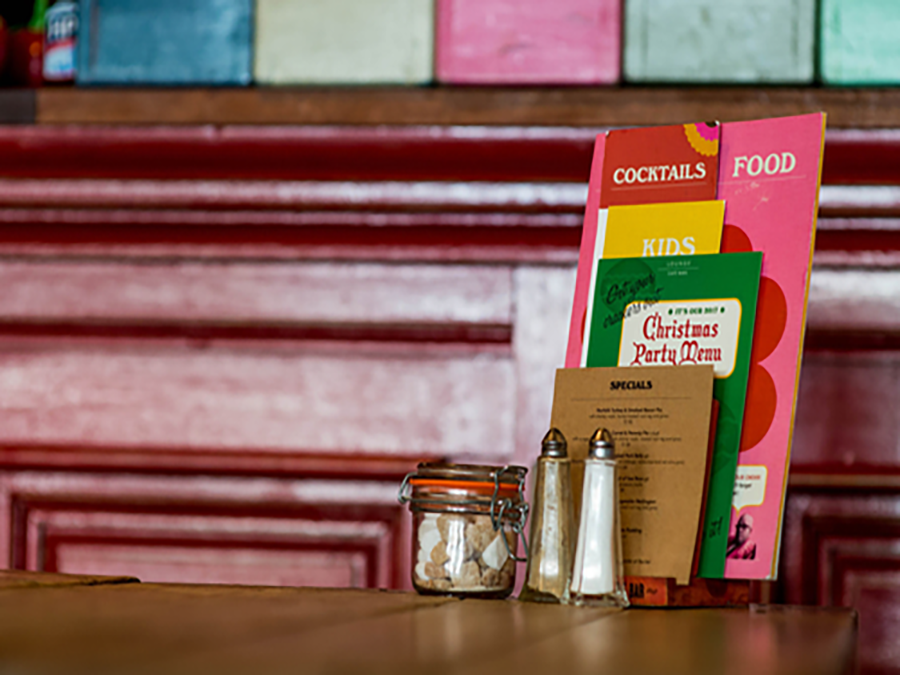
Hospitality businesses rely on clear communication at every stage of the customer journey. From arrival at your venue to the final moments of a guest’s stay, print shapes how people understand your offer, move through your space, and make decisions.
Whether you run a café, restaurant, bar, hotel, guesthouse or spa, many of the same principles apply. Your print needs to attract attention, present choices clearly, guide behaviour, and assist your team to deliver a consistent experience.
This guide breaks down hospitality print by function, showing how different formats can solve specific challenges across your venue.
Contents
Print that attracts attention and brings people in
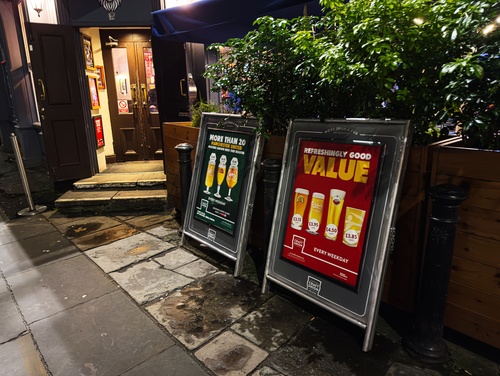
For many venues, the first interaction happens before a customer steps inside. At this stage, print is doing two jobs at once. It needs to catch attention in a busy environment, and it needs to answer the basic questions that determine whether someone comes in or walks past.
Create kerb appeal
Print at your shopfront plays a direct role in capturing passing trade and building local recognition. It sets expectations, signals what you serve, and helps passers-by make quick decisions.
Do
- Design for distance with large type, strong contrast, minimal wording.
- Appeal to their appetites for spontaneous custom
- A humorous A-board message may just go viral!
Don’t
- Overcomplicate messages that need to be understood at a glance
- Obstruct access or reduce pavement flo
- Allow print to become worn or faded, signalling a lack of care
Useful formats
- A-boards
- Posters
- Waterproof Posters
- Waterproof Menus
- Wall Menus
- Outdoor menus
- Window clings
- Snap Frames
Shape your outdoor space
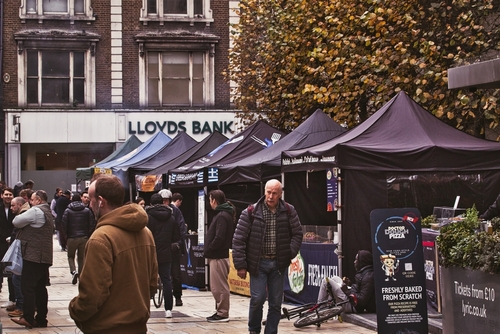
Branded structures and displays help turn outdoor space into part of your venue. They create visibility, establish boundaries, and signal that the area is managed and ready for use.
Do
- Use barriers to clearly define where service begins
- Choose colours and branding that align with your wider identity
- Position parasols or gazebos to improve comfort and visibility
- Arrange seating to make the space feel purposeful and inviting
Don’t
- Leave outdoor areas undefined or visually disconnected
- Mix styles or branding that weaken recognition
- Overcrowd the space at the expense of movement
- Allow structures to become worn or unstable
Useful formats
Print that helps customers choose and spend
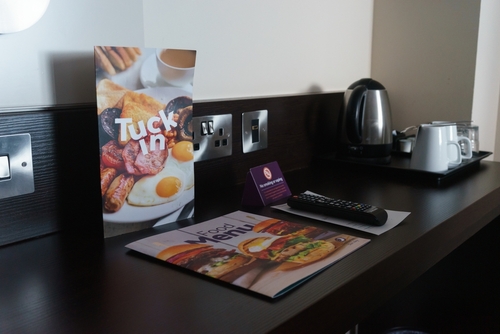
Once inside, attention shifts from attracting customers to helping them decide. Print now needs to present options clearly while guiding choices towards what matters most. Done well, it reduces hesitation and supports confident ordering without slowing service.
À la carte print
From fast food to fine dining, menus need to be quick to scan, easy to handle, and suited to how your venue runs. The right format depends on turnover, environment and how often your offer changes.
Do
- Match the format to service style, from quick-service to seated dining
- Use layout and spacing to make scanning easy, especially in low light
- Choose materials based on handling, spills and frequency of use
- Use QR codes selectively where they reduce wait times or support updates
Don’t
- Rely on one menu type to do every job
- Overcrowd layouts with too many items or competing messages
- Use materials that quickly show wear in high-turnover settings
- Make customers work to find key information such as pricing or categories
Useful formats
- Disposable menus for single-use hygiene and quick turnaround
- Waterproof menus for wipe-clean, tearproof durability in busy service
- Flat restaurant menus for clear, full-range presentation across courses
- Wall menus to display options visibly without handling
- Table talkers for a 3-D way to promote drinks, specials and dessert items
- Placemat menus to combine dining surface and menu in one format
- Countertop menus for highlighting offers at the point of order
Draw the eye to what matters
Print around your hospitality spaces can support menus by highlighting specials, recommendations and timely offers. It can also bring dishes to life with appetising visuals and give priority items greater visibility. Smaller formats such as beer mats and branded cups can reinforce key messages without adding clutter.
Used well, these formats guide attention without interrupting the experience. They sit where decisions are made and bring key items forward.
Do
- Use table talkers and strut cards to highlight timely offers at the point of decision
- Position posters and signage where customers naturally pause or queue
- Use wall graphics to reinforce offers or create a visual focal point
- Use lightbox displays to give priority items extra presence, especially in low light
- Keep messaging focused on one idea at a time
Don’t
- Repeat the full menu across multiple formats
- Compete with yourself by promoting too many items at once
- Place messaging where it is easily overlooked
- Let promotional print become static or outdated
Useful formats
- Table talkers
- Posters
- Signage
- Strut cards
- Wall stickers
- Lightbox displays
- Lightbox frames
- Backlit posters
- Lightbox display graphics
- Beer mats
- Branded plastic cups
Print that informs, directs and reassures
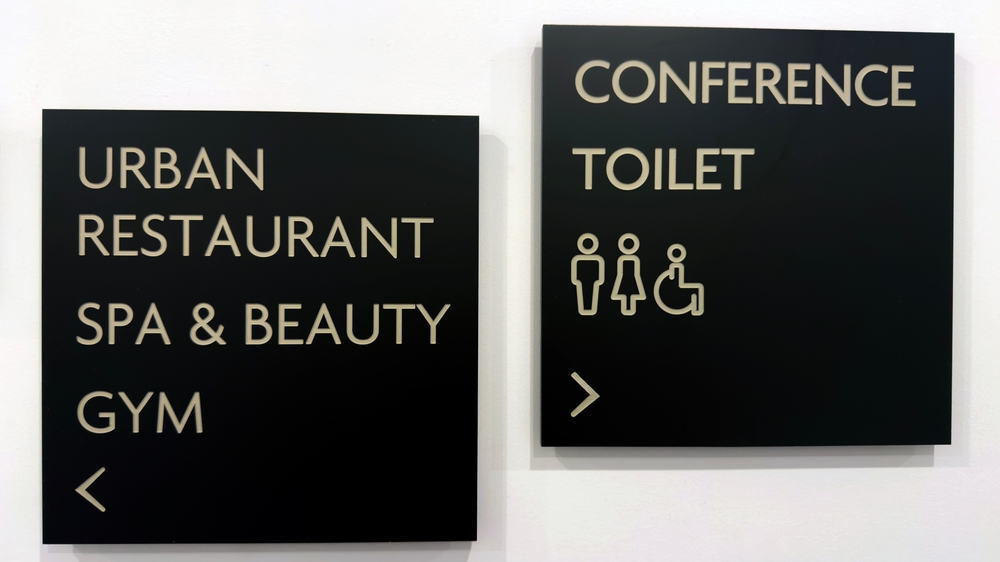
As customers move through your space, they look for cues on where to go and what to do next. Print provides that guidance while answering practical questions along the way. Clear, well-placed information helps people feel at ease and keeps everything running smoothly.
Show people where to go
Confusion and uncertainty are off-putting for diners and guests. Clear print shows people where to go and what to do, helping service run smoothly. Without it, even small hesitations can slow service and affect the overall experience.
Do
- Make ordering and collection points obvious from a distance
- Use consistent wording such as “Order here” and “Collect here”
- Reinforce flow with floor graphics, wall signage and overhead cues
- Place prompts where decisions happen, not after
- Keep instructions short and direct
Don’t
- Assume customers know your process
- Rely on staff to repeat the same directions
- Mix conflicting messages or unclear terminology
- Position signage where it is hidden by queues or fixtures
- Overcomplicate simple actions with too much detail
Useful formats
Make information easy to find
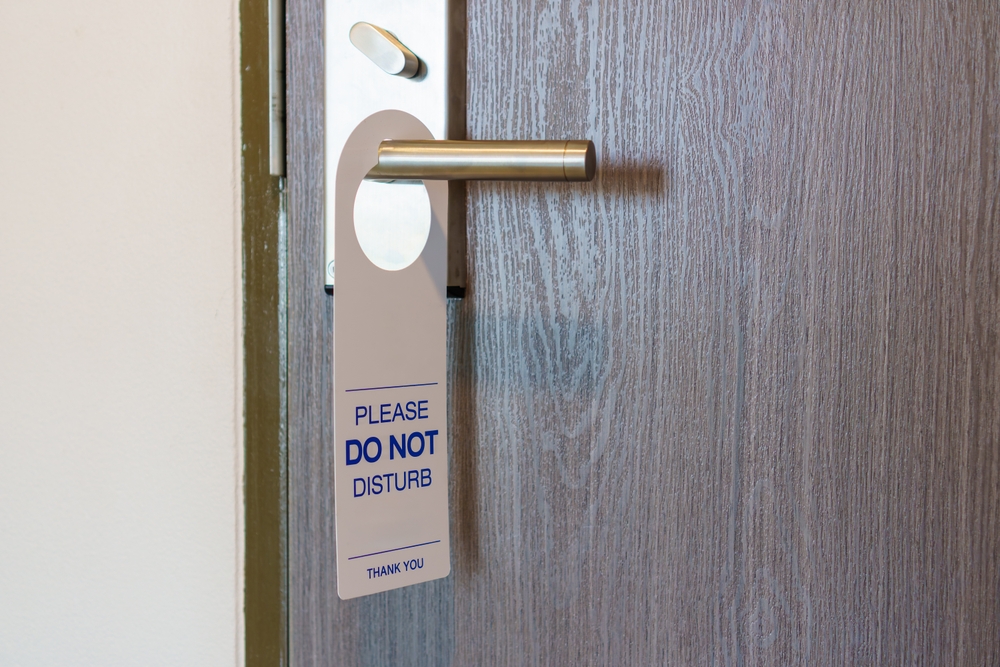
Guests expect to find practical information quickly, without needing to ask. That includes Wi-Fi details, room service, house rules, how to use in-room facilities, where to find amenities, and what is expected during their stay. Simple identifiers such as allergen labels, dietary indicators and room status markers also play an important role in reducing uncertainty.
The same applies across the venue, from fire safety and accessibility notices to legally required information. Clear, well-placed print keeps everything consistent, reduces repeated questions, and helps guests feel at ease.
Do
- Group related information, such as Wi-Fi, room details and local guidance, in one clear place
- Use in-room folders or inserts to keep information organised and easy to update
- Present safety, accessibility and legal notices clearly without overwhelming the space
- Use stickers for clear, visible labelling of allergens, dietary options or key instructions
- Use door hangers to communicate room status, cleaning requests or guest parking
- Keep formats consistent across rooms and areas
Don’t
- Scatter information across multiple locations with no clear structure
- Overload guests with dense blocks of text
- Let outdated details remain in circulation
- Rely on staff to repeat routine information
Useful formats
- Door hangers for room status, cleaning requests or parking identification
- Signage
- Posters
- Wall stickers
- Stickers
- Printed Folders
Print that supports colleagues and operations

Behind the scenes, print helps hospitality teams to work consistently and efficiently. It supports processes, reinforces standards, and keeps information visible where it is needed. Used well, it reduces reliance on memory and helps maintain performance across every shift.
Keep work flowing smoothly
Teams work best when processes are clear, expectations are aligned, and a sense of shared purpose emerges. Print helps reinforce that consistency. It creates a shared look across signage and uniform, supports ordering processes, and helps keep service standards sharp at all times.
Do
- Use floor graphics to guide movement through kitchens, service areas and corridors
- Mark entry and exit points clearly to avoid disruption during service
- Use NCR pads or notepads to keep ordering accurate and traceable
- Identify staff roles with lanyards, badges or uniform elements
- Keep process cues visible where action is required
Don’t
- Leave movement and workflow to chance during busy periods
- Rely on memory for repeatable processes
- Create layouts that force staff to stop and second-guess
- Allow unclear or inconsistent processes to develop between teams
Useful formats
- Floor stickers
- Signage
- NCR pads and notepads
- Lanyards and staff ID
- Branded clothing and caps
Keep standards visible
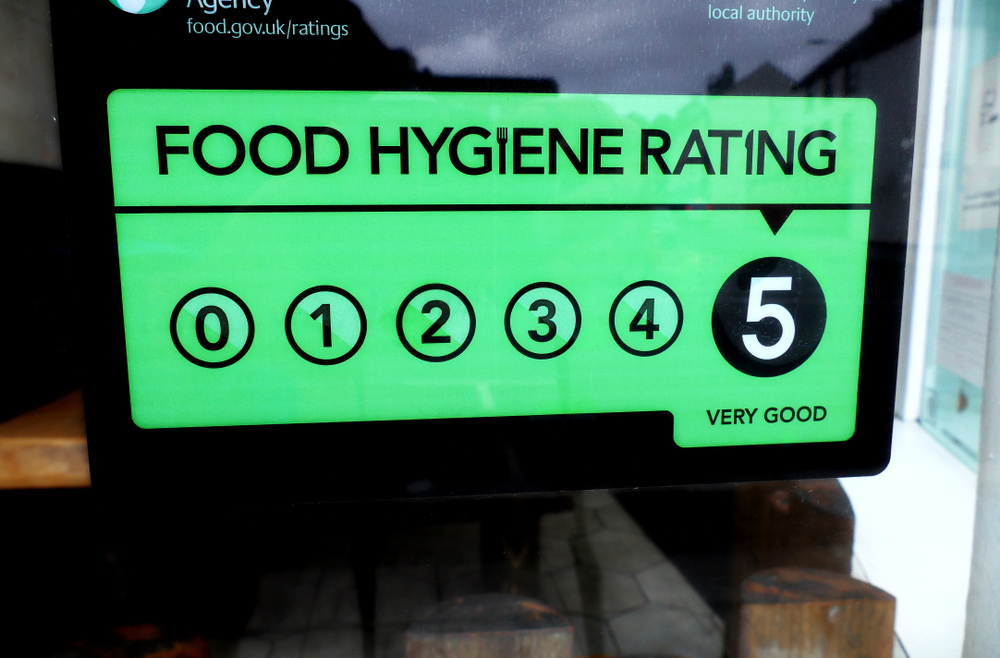
Clear internal communication helps maintain standards, reinforce responsibilities, and keep everyone aligned across shifts. Longer-term visibility also matters, from shift planning to seasonal preparation.
Do
- Display hygiene reminders, safety notices and responsibilities clearly
- Use posters and snap frames for rotas, schedules and updates
- Highlight key roles such as first aiders and fire marshals
- Keep internal messaging consistent across departments
- Use print to reinforce standards and expectations
- Use wall calendars and planners to track staffing, events and operational timelines
Don’t
- Rely on verbal updates for important or repeat information
- Let notices become cluttered, outdated or easy to ignore
- Mix internal messaging with customer-facing materials
- Overload staff with too much information in one place
Useful formats
Make every piece pull its weight
Print works best when each item has a clear job and earns its place. From the street to the table to behind the scenes, it should remove uncertainty, guide behaviour and keep things running smoothly.
Review it regularly. Update what’s changed, remove what’s no longer needed, and keep everything consistent. Small improvements across multiple touchpoints quickly add up and help to create a consistent brand and unique guest experience.



 English
  French
  Spanish
  German
  Italian
  Dutch
Dutch  Polish
  Romanian
  Bulgarian
  Danish
  Turkish
  Portuguese